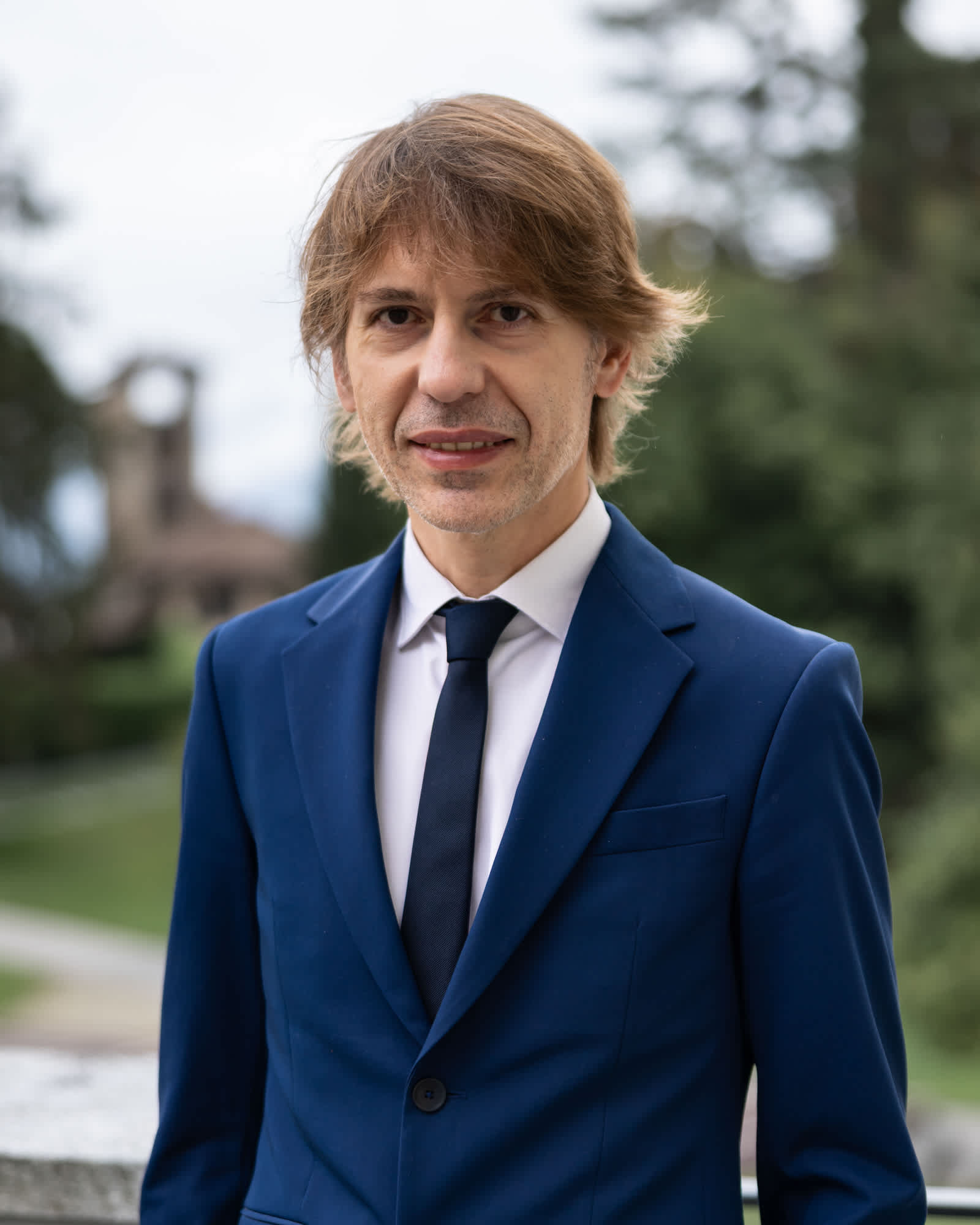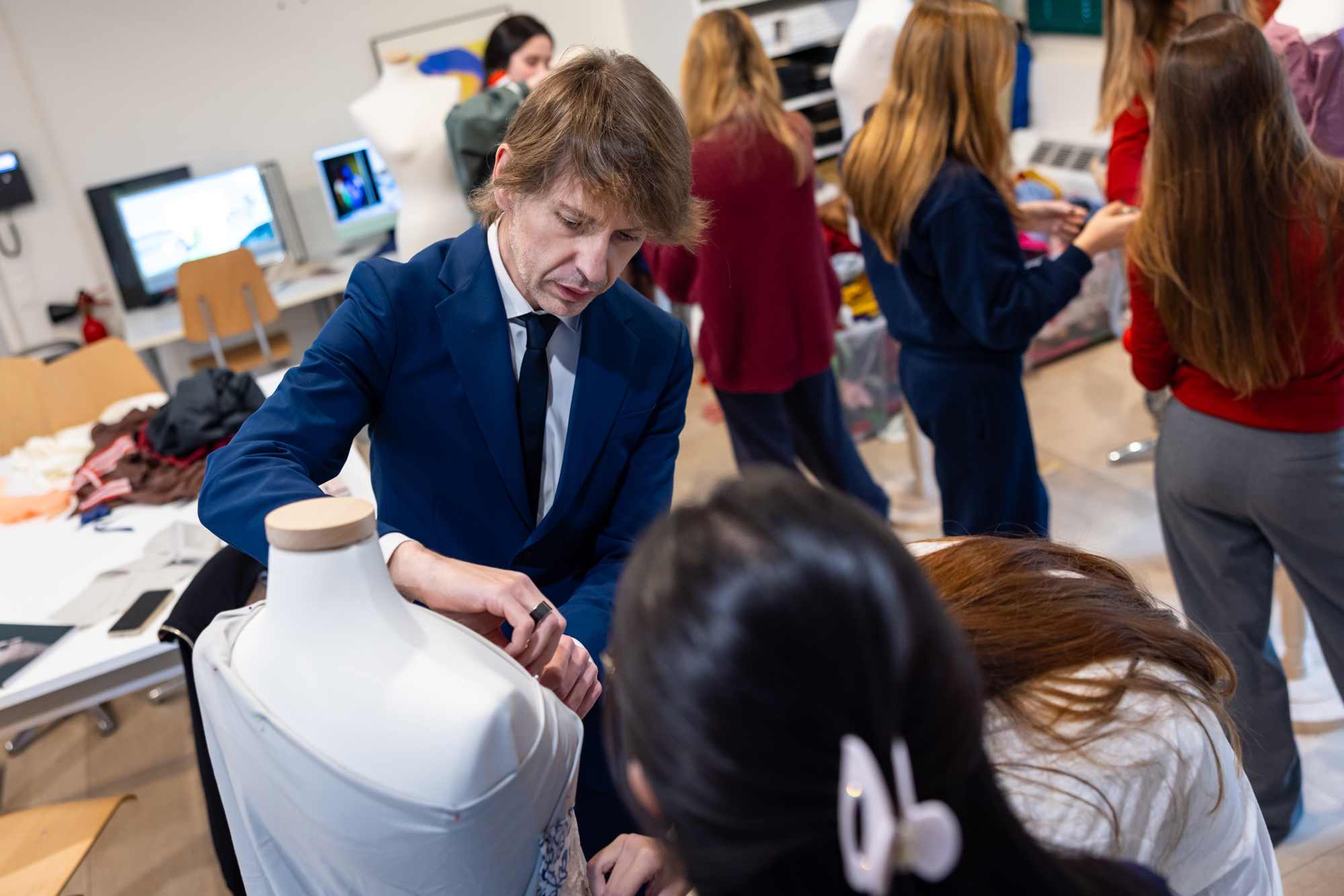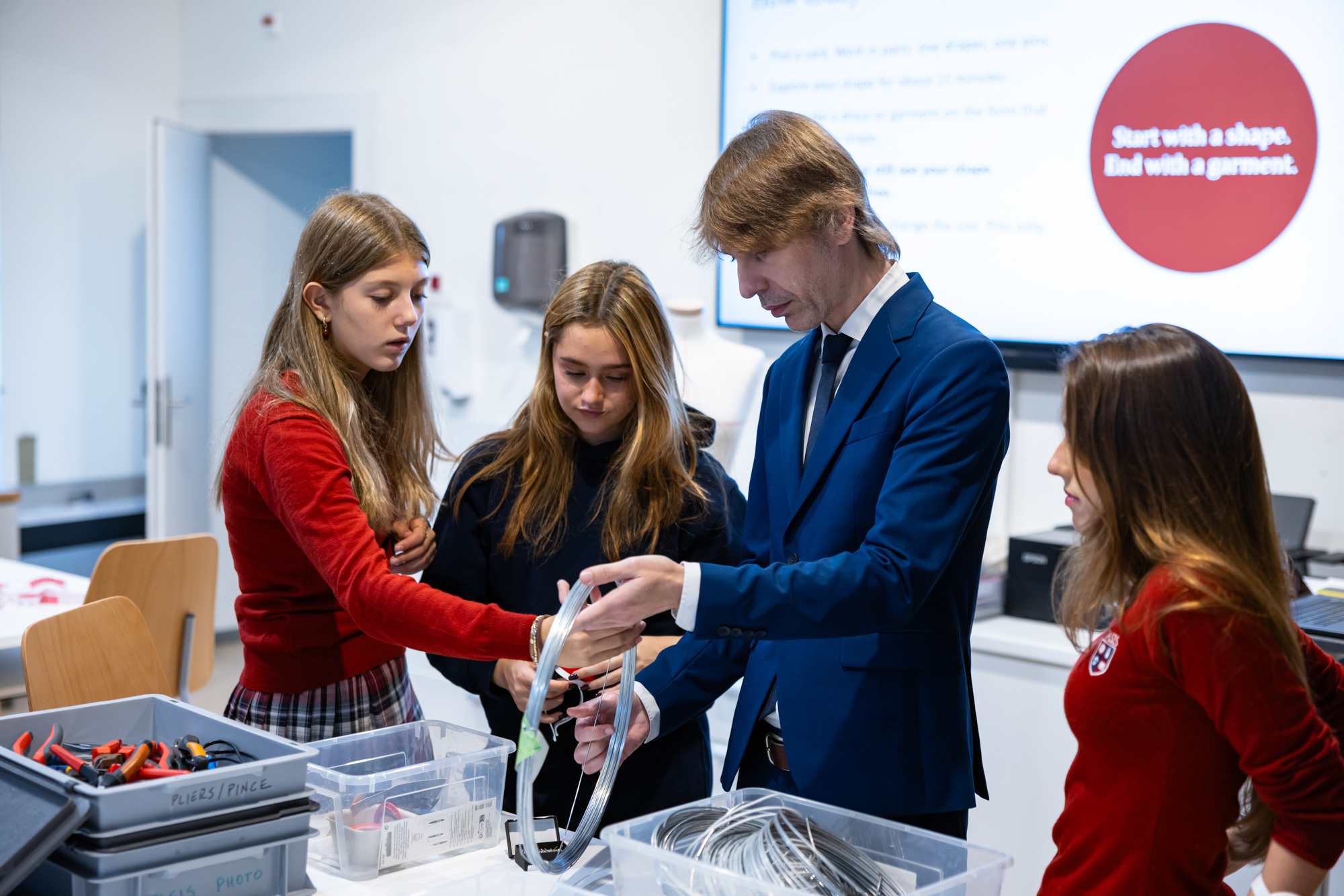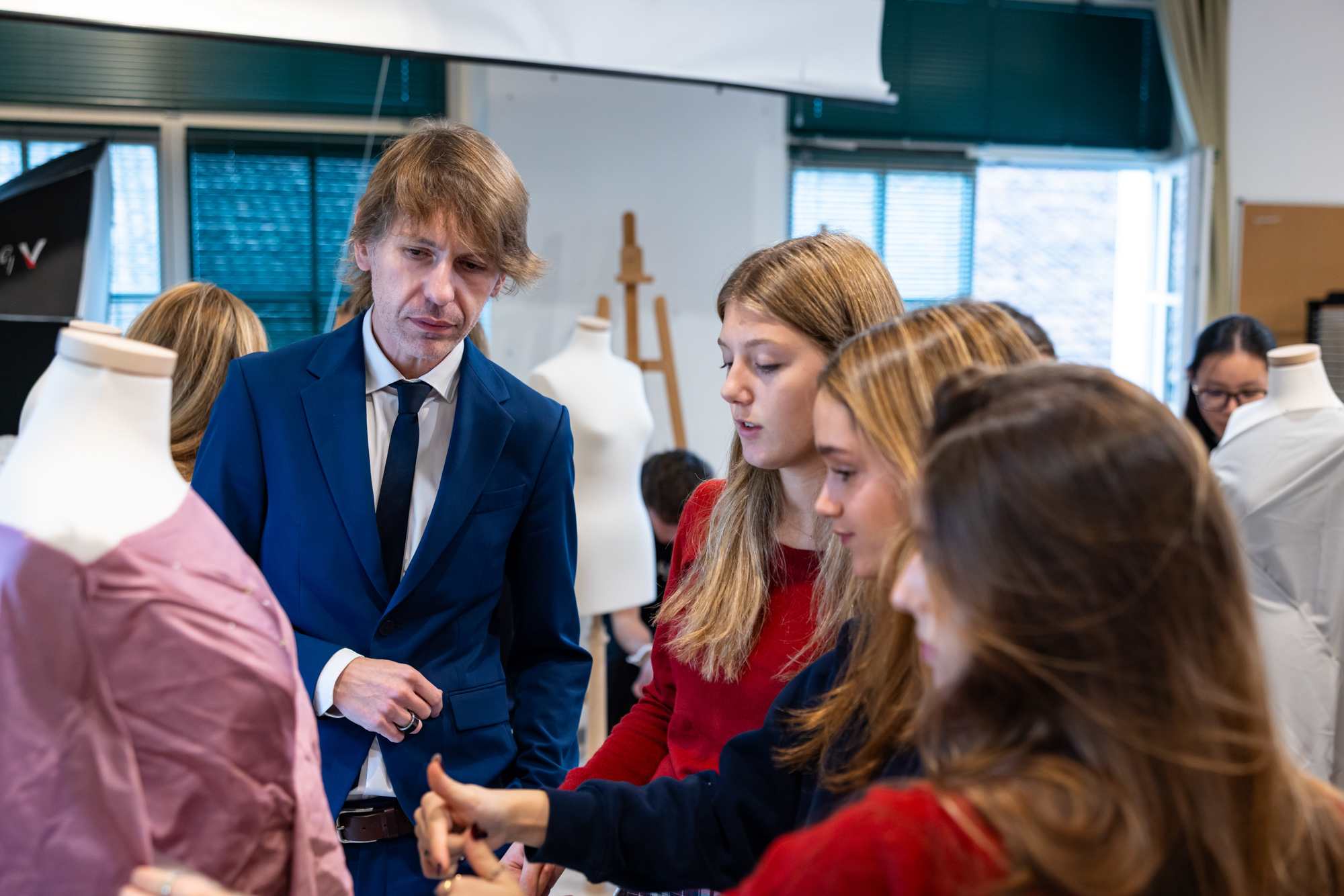
Andre Adami joined TASIS in 2025 and currently serves as Visual Arts Department Chair, overseeing curriculum development from Pre-Kindergarten through grade 12. He teaches IB Visual Arts, the new Foundations in Art & Design course for grade nine, and an elective Photography course, while also leading the new Fashion Design after-school activity for High School students. His academic background is rooted in philosophy; he earned a master's degree combining philosophy and visual arts at the Catholic University of Sacred Heart in Milan, completing a thesis in semiotics on how advertising language functions within artistic practice. He later earned a PGCE and a master's degree in International Education at the University of Sunderland in England. His career began in higher education in Italy, lecturing on art history and semiotics at the European Institute of Design and the Academy of Fine Arts in Milan. In 2010, he moved to Asia, where he spent roughly 15 years focused on art education—first designing and managing undergraduate programs in product design and fine arts, and later teaching AP Art and Design, A Level Art and Design, and IB Diploma Visual Arts. He served as Head of Arts at Dulwich International College Shanghai, overseeing curriculum across visual arts, theater, and music, and has supervised student work published on the IB Visual Arts InThinking platform. Since 2020, he has been an IB examiner and IBEN workshop leader, and he is currently pursuing a doctoral program at the University of Zurich, researching how artificial intelligence is reshaping the learning experience, creative process, and meaning-making in secondary visual arts. His teaching philosophy draws on the concept of Bildung, emphasizing that students are formed by what they encounter and struggle with, and he designs experiences that embody knowledge—working with resistant materials, unsettling images, or critical questions—so that students rediscover the slow pace and personal work of making meaning in an age of instant AI-generated imagery.
Adami values the diversity of the student body at TASIS, noting that students from all over the world provide a strong starting point for discovering and making connections among different cultures, experiences, and languages in the visual arts. For the year ahead, he is particularly proud of the new Fashion Design program, which offers students the opportunity to collaborate with the prestigious Istituto Marangoni in Milan—a model where students learn through experience while connecting with universities linked to that subject. He aims to expand this model by creating more opportunities for students to engage with universities specializing in fine arts, product design, and new media, and to extend after-school offerings to the Middle School and Elementary School sections. He also seeks to expand the school's visibility within the Lugano community by organizing exhibitions in local galleries so the extended community can enjoy students' artwork. Regarding what art subjects teach that traditional academics may not, Adami highlights transferable skills: problem-solving that fosters empathy by requiring students to understand the needs of their audience; resilience, as creating art demands discipline and sacrifice; and an appreciation for beauty, one of the founding pillars of TASIS, which anchors the school's core values. He hopes students will remember that he never just gave answers but always replied with another question—and that they grew to appreciate that. He identifies the biggest misconception about good art as focusing solely on the final product without considering the creative process, or trying to rank media against one another; what matters is the logical, creative process visible in the finished piece, alongside craft, since technique is the language that allows students to communicate ideas clearly. The one quality every student should develop, he believes, is curiosity—essential for artists and thinkers navigating today's world.