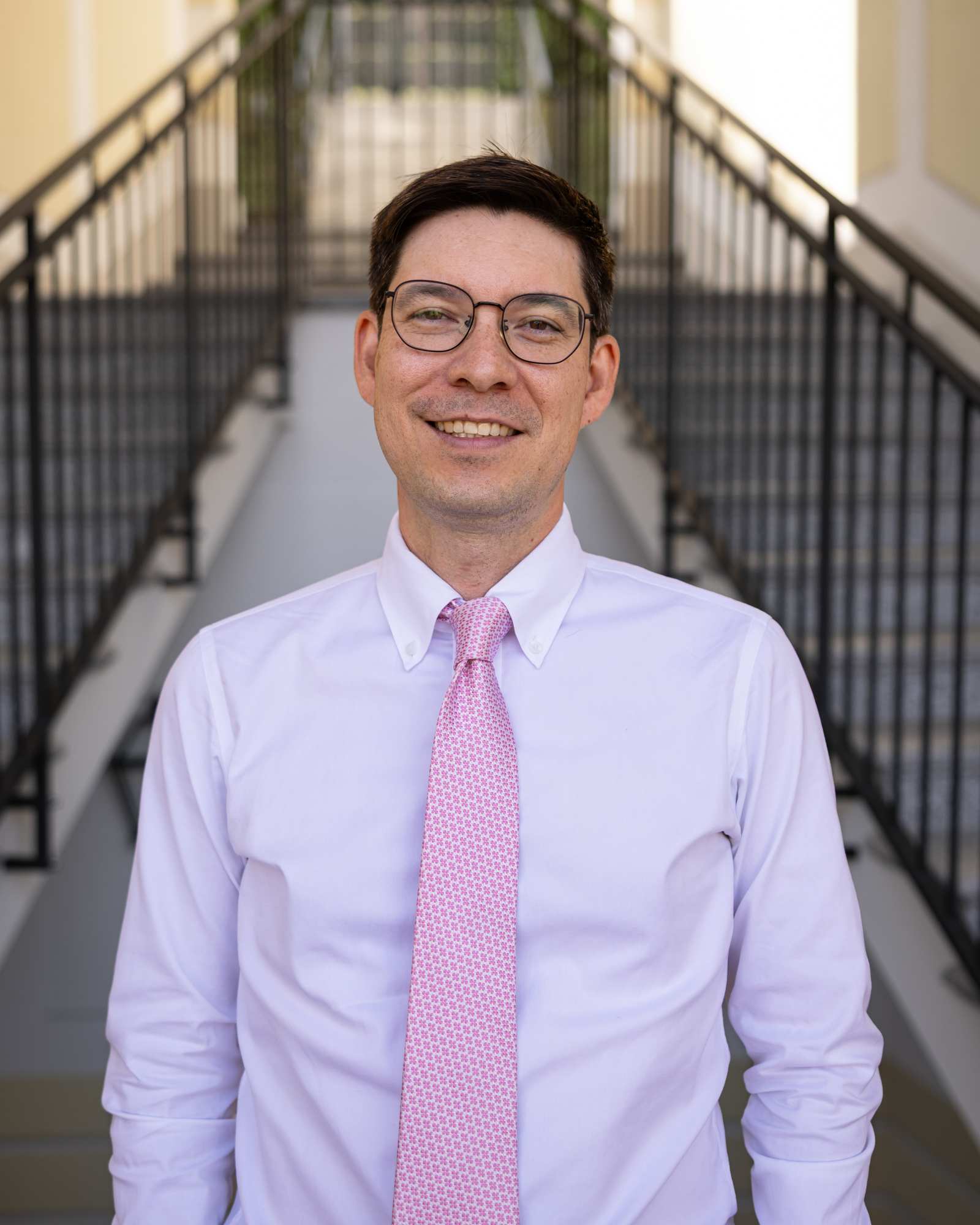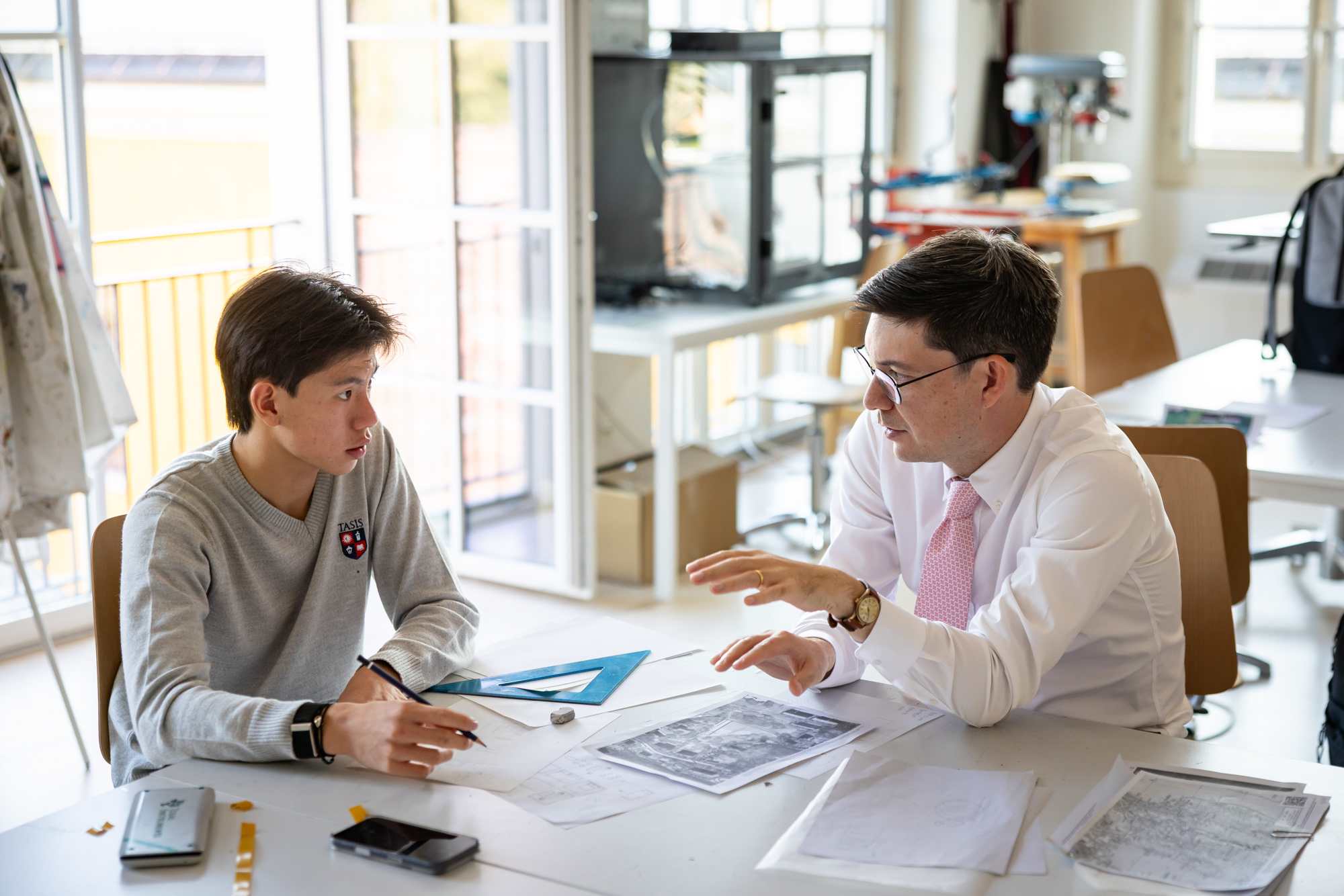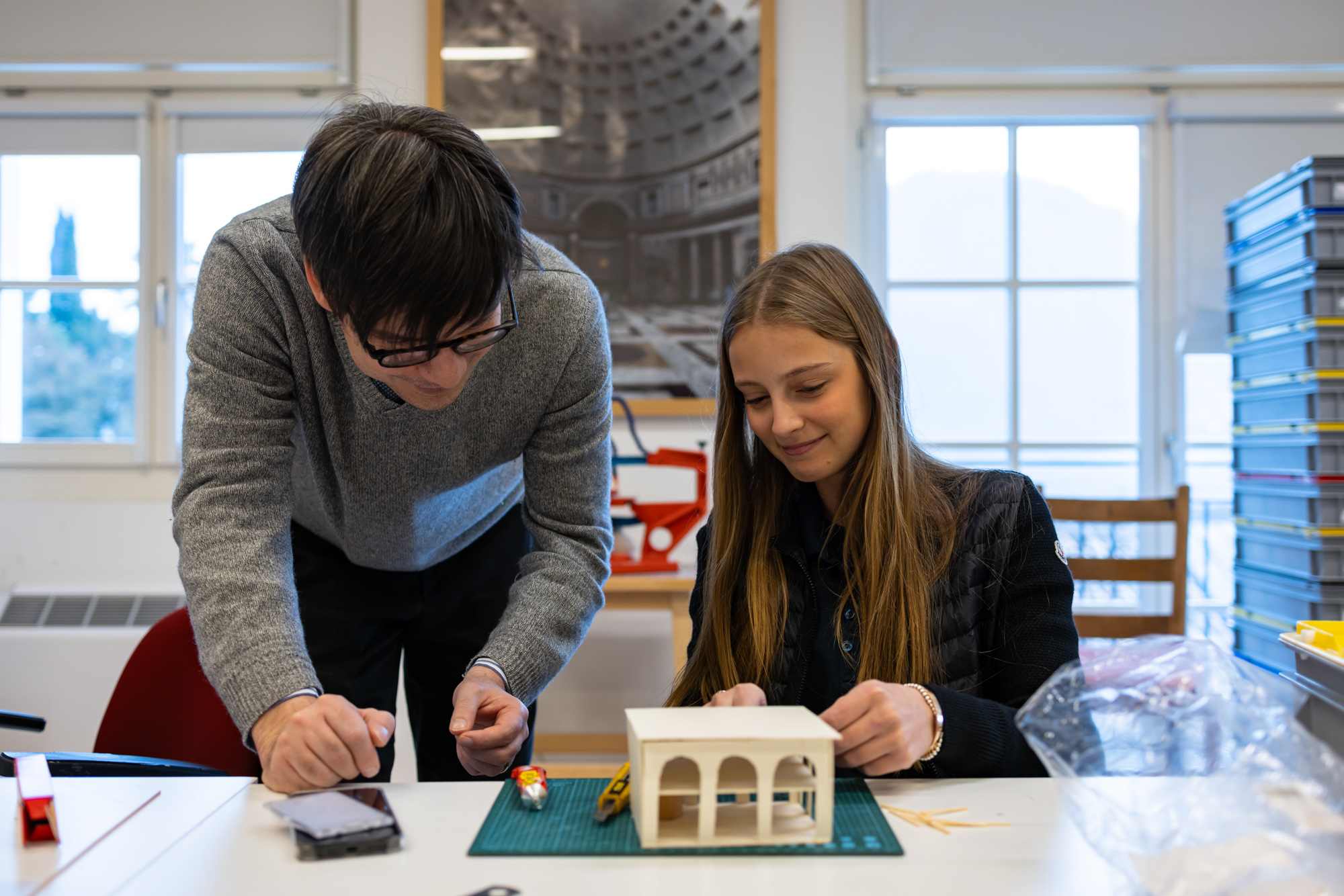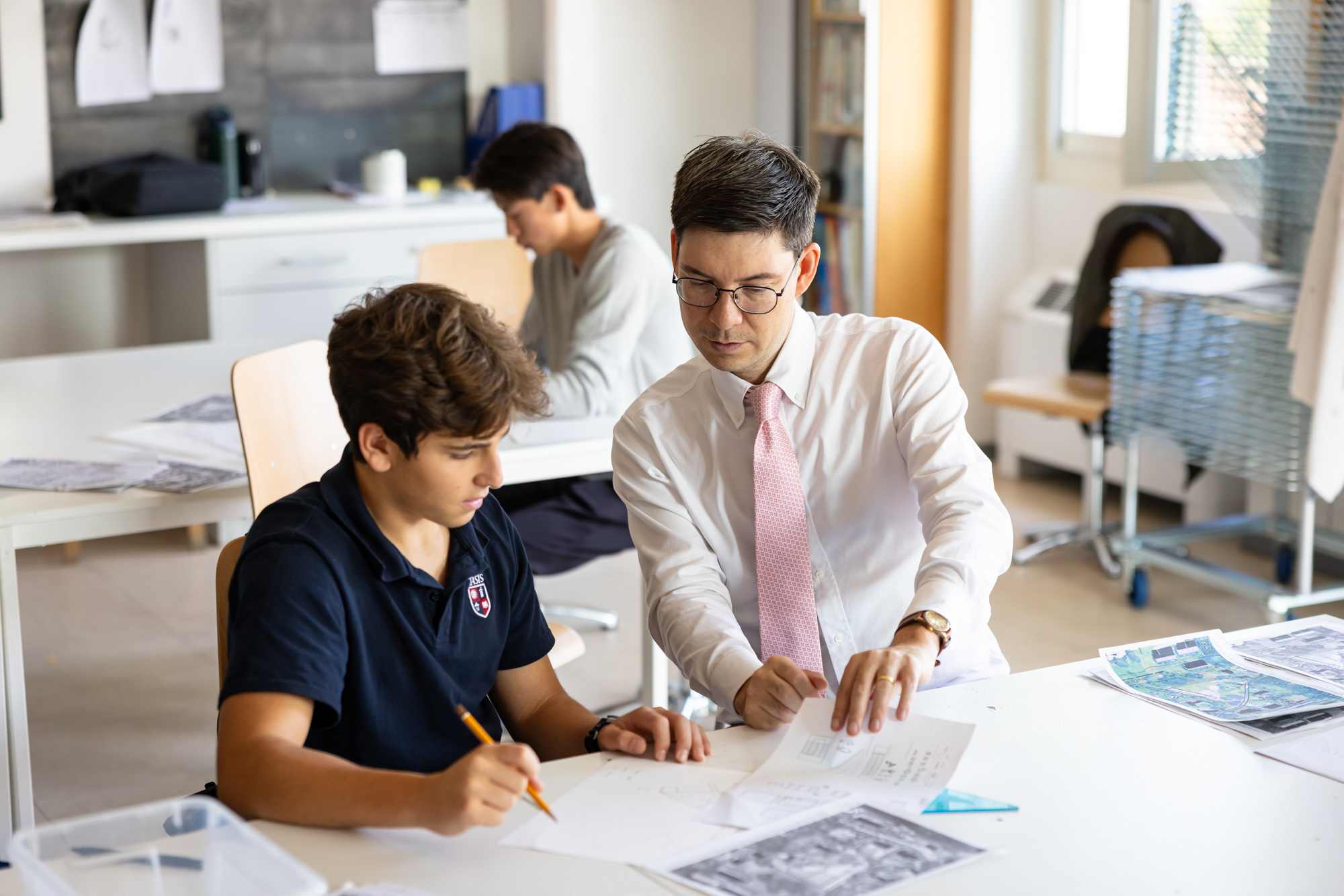
Cory Chen ’27 interviewed High School Art Teacher Thomas Wong, who joined the TASIS Faculty in 2023 and currently teaches Architecture and Foundations in Art & Design while also coaching the Varsity Badminton team. Wong described his educational background and professional experiences prior to arriving at TASIS. He graduated from the National University of Singapore with a Master of Architecture and also earned a Master’s degree in Interaction Design at SUPSI in Mendrisio. He runs his own architecture and interior design practice, Studio Hagen-Wong, based in Singapore and Ticino, with projects around Italy and Switzerland. Prior to setting up his own firm, he worked at a corporate architecture firm on large-scale projects such as Jewel Changi Airport and public housing projects for the Singapore government. He was also an adjunct professor at the National University of Singapore and Singapore University of Technology and Design before arriving at TASIS. Wong explained that he has always been interested in how design shapes human experiences and emotions, and transitioning into teaching has allowed him to share that passion. He finds it encouraging to see how young minds work creatively and rewarding to watch students translate problems into solutions and convert abstract ideas into concrete shapes and experiences. Teaching also provides a break from the routine of running his practice and helps him reframe his thinking about design by condensing complicated concepts into simple ones. Regarding his teaching philosophy, Wong approaches education from a project-based studio environment. Coming from an architectural background, he believes students learn by doing. He encourages them to ask critical questions, make many prototypes, and consider the human and environmental aspects of their actions when designing. He strives to create an open classroom environment where students feel comfortable making mistakes, noting that students often seek the first perfect design, but design requires making, breaking, and remaking before it improves.
Wong shared what he likes most about teaching at TASIS, highlighting the diverse student body. As a product of a third-culture upbringing—born in Austria but raised in Singapore—he enjoys connecting with students who have grown up in multiple cultures. He also values the environment, living and studying in a beautiful place with amazing architecture around; many of the projects and architects he studied in school are just around the corner from where he lives, making it a unique experience to practice and teach there. When asked about his favorite course or project, Wong said he cannot pinpoint one because he enjoys teaching everything. The most rewarding part is usually the end of a project, when he sees what students have produced and the struggle they have been through all semester. He especially enjoys seeing students who struggled most in the beginning produce interesting work at the end. Regarding a particular moment or student achievement, Wong could not identify a specific one but feels proudest when students who struggled initially come out having learned something through making mistakes and creating something—whether presenting a design concept or drawing in perspective. If they leave his class having learned one good skill they can apply in life, that is most important to him. Looking ahead, Wong hopes to integrate some 3D printing this year, as the robotics team recently acquired a 3D printer, and to continually push students to explore new materials when making models. If he could add one program or initiative, he would introduce an element of real estate and financial planning into his course, speaking with industry experts outside the school. He noted that designers are often not the best business people, and to be successful, one needs to balance financial and creative aspects. He hopes to introduce this as an additional assignment rather than a course. Finally, Wong hopes students will remember his class as a space where curiosity was encouraged and where they learned to look at the world through a design lens. He feels the Visual Arts Department is a space for students to decompress and hopes they think of the studio as a safe space to express themselves creatively and make real things with their hands.