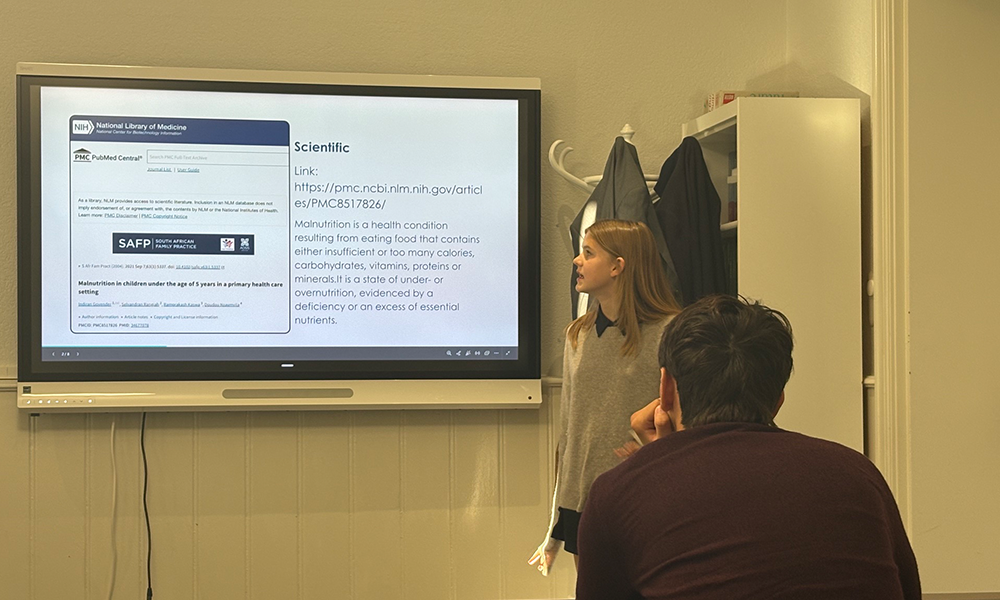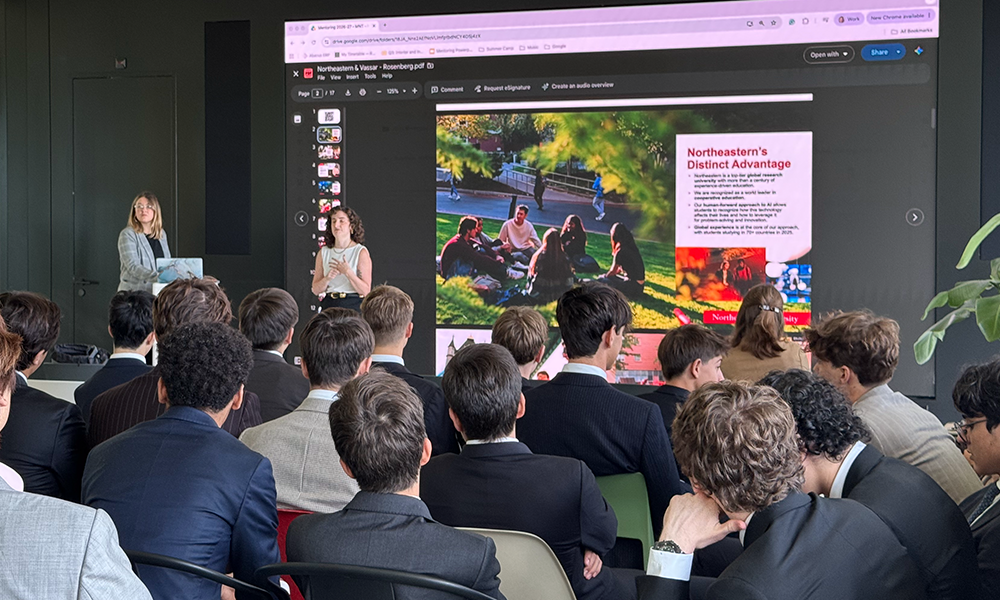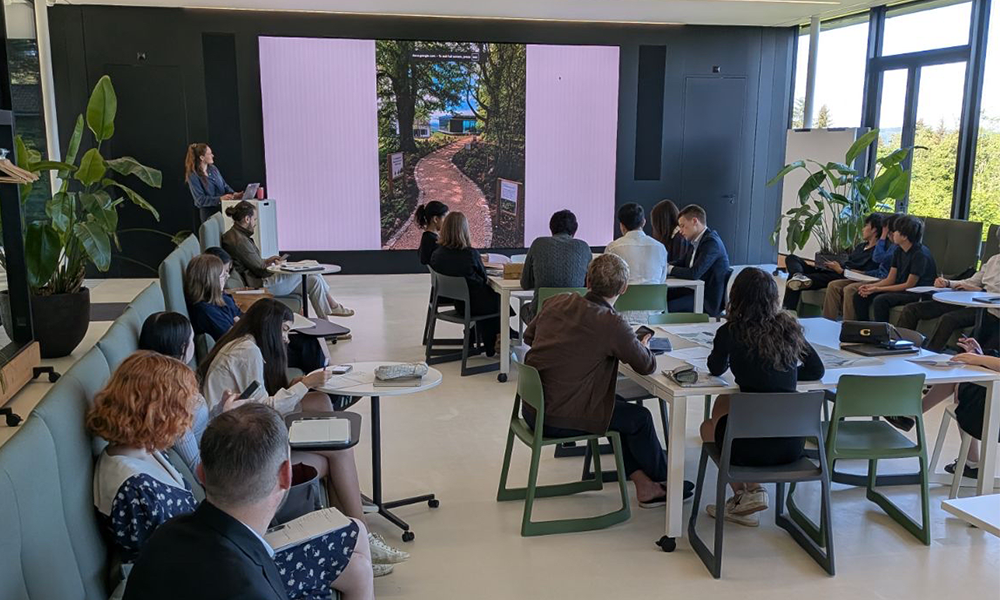
This week in AP Seminar at Institut auf dem Rosenberg, students took on a range of complex global issues, using different sources to question, compare and build their own understanding of each topic. The presentations covered everything from the impact of social media on young people and the environmental effects of travel, to malnutrition, our relationship with nature, and the experiences of women in Afghanistan within the wider conversation around female empowerment. Each student selected a topic of personal and global relevance, then embarked on a rigorous inquiry process that demanded critical engagement with multiple perspectives. The AP Seminar framework encourages students to move beyond surface-level analysis, and this week's presentations demonstrated precisely that. By synthesising information from academic journals, news reports, personal interviews and multimedia sources, students constructed arguments that were both nuanced and evidence-based. The diversity of topics reflected the interconnected nature of today's world, where issues of technology, environment, health, gender and culture frequently intersect. For instance, discussions on social media's impact on youth mental health often linked to broader questions about digital literacy and societal norms, while conversations about malnutrition connected to environmental sustainability and global inequality. This holistic approach not only deepened students' understanding but also honed their ability to communicate complex ideas effectively. The AP Seminar course at the school is designed to foster independent research and collaborative problem-solving, and this week's presentations were a testament to the students' growing competence in these areas. As they continue to refine their inquiry skills, they are better prepared to engage with the world's most pressing challenges, both within and beyond the classroom.
What stood out was the way students approached each subject from more than one angle, looking closely at the evidence, challenging different viewpoints and asking thoughtful questions along the way. This multi-perspective approach is central to the AP Seminar curriculum, which emphasises the importance of evaluating sources critically and considering alternative interpretations. In their presentations, students not only presented their findings but also invited their peers to question assumptions and explore counterarguments. For example, when discussing the environmental effects of travel, some students weighed the economic benefits of tourism against its carbon footprint, prompting a lively debate about sustainable practices. Similarly, the examination of women's experiences in Afghanistan was framed within a broader discussion of female empowerment, encouraging students to consider cultural, political and historical contexts. The ability to navigate such complexities demonstrates a high level of analytical maturity, one that will serve these students well in their future academic and professional endeavours. The presentations also highlighted the importance of empathy and global awareness, as students connected personal stories to larger structural issues. By engaging with topics like malnutrition and our relationship with nature, they developed a deeper appreciation for the interdependencies that shape our world. The AP Seminar course at Institut auf dem Rosenberg continues to challenge students to think critically and creatively, preparing them to become informed and active global citizens. As the semester progresses, these skills will be further refined through continued research and presentation opportunities, ensuring that students are well-equipped to address the challenges of an increasingly complex world.