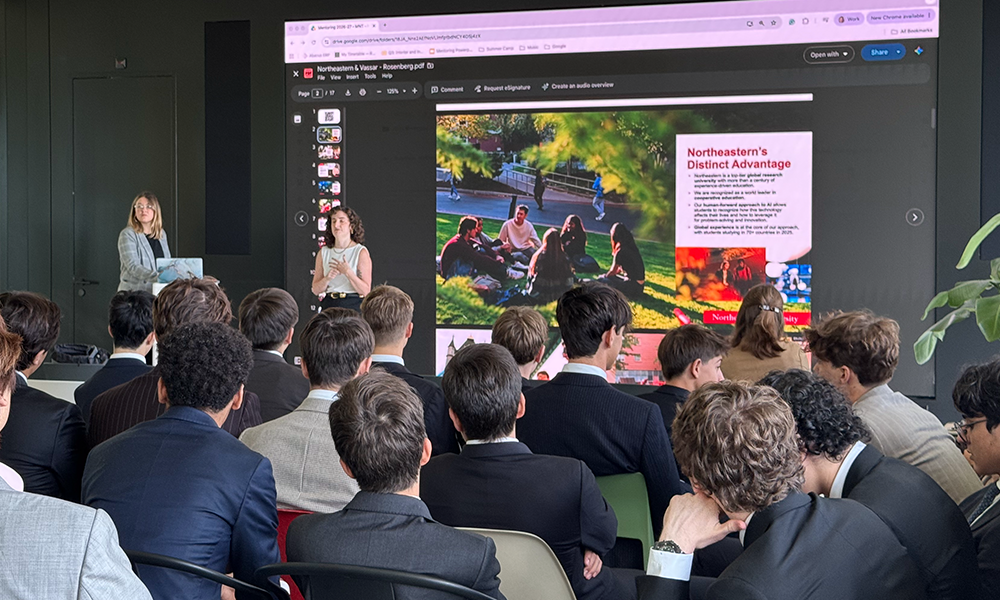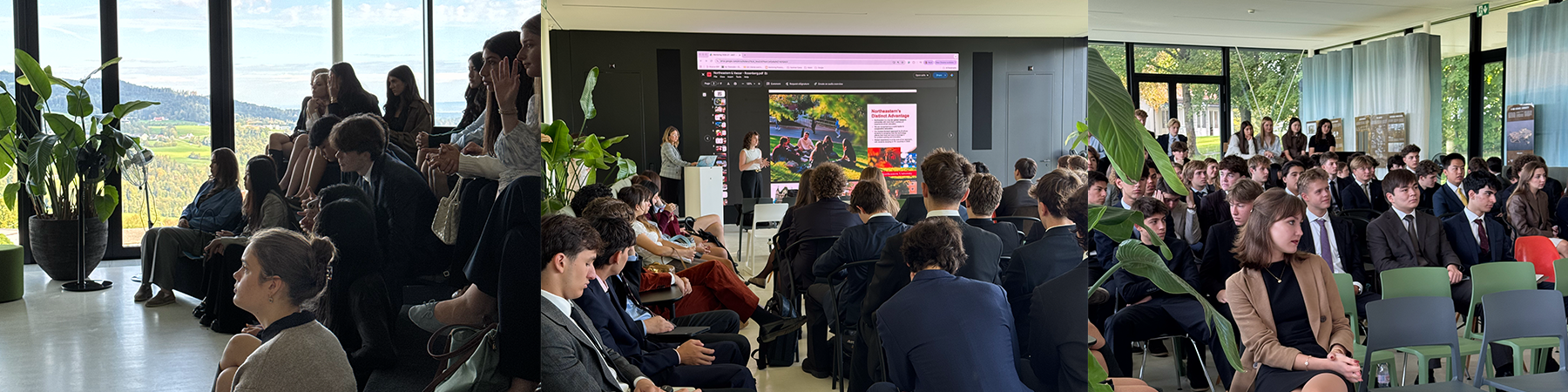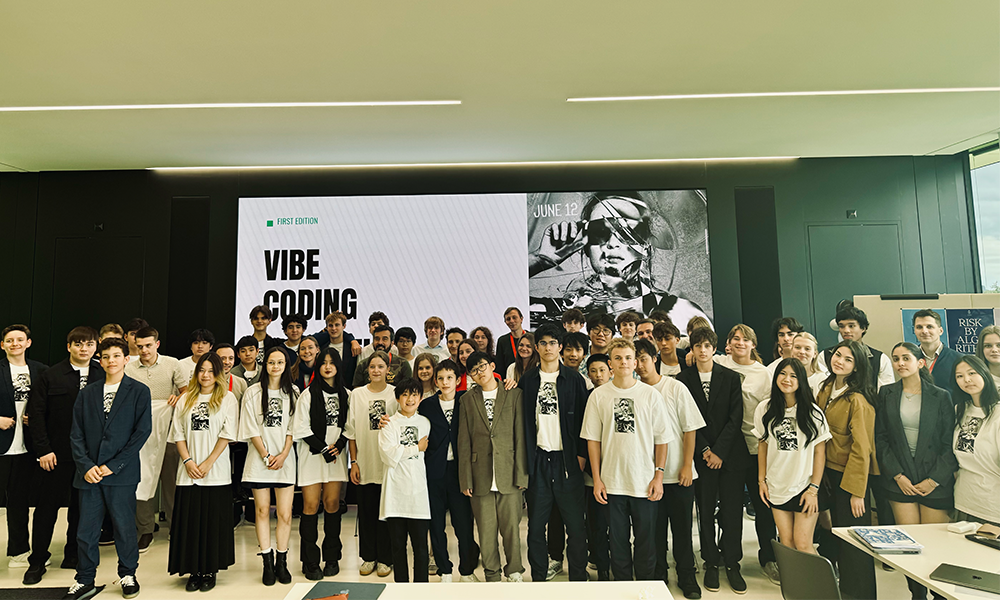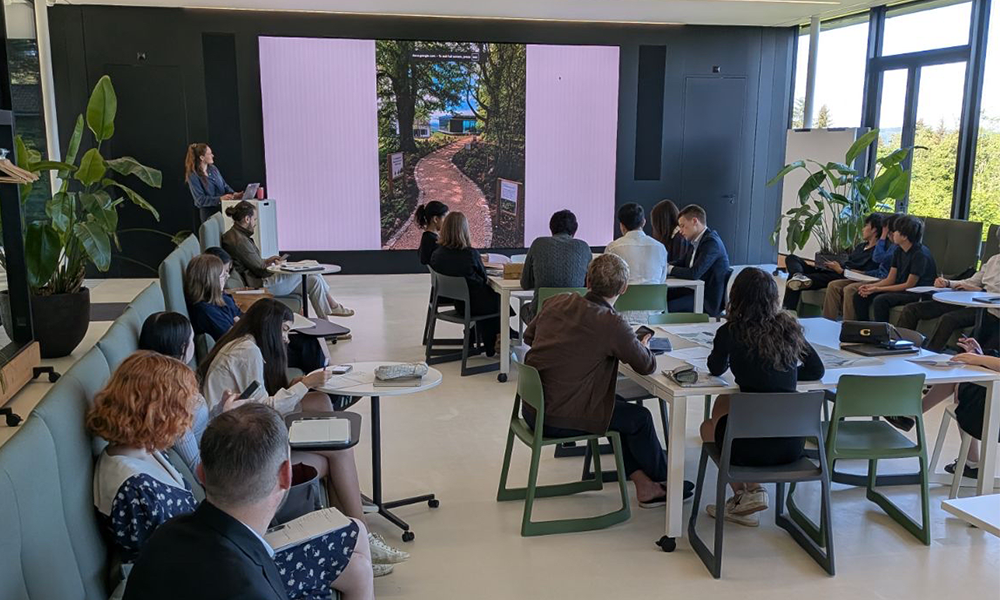
What does studying at a US university really look like? This week, representatives from Northeastern University and Vassar College visited 瑞士玫瑰山国际学校 to meet with Grade 10–12 students considering the US as part of their university plans. The visit formed part of the school's broader commitment to providing students with direct, unfiltered access to the institutions they may one day attend, ensuring that university choices are informed by firsthand insight rather than secondhand reputation.
Students heard directly about academic programmes, campus life and the different opportunities each institution offers, before opening the conversation with a Q&A. From courses and applications to the realities of studying in the US, the session gave students the chance to ask the questions that matter to them and explore how different universities might align with their individual ambitions. The presence of two distinctly different institutions — Northeastern University, known for its cooperative education model and global network, and Vassar College, a liberal arts college with a strong residential tradition — allowed students to compare pathways that vary significantly in structure, scale and philosophy.
For Grade 10–12 students, this kind of engagement arrives at a pivotal moment. Decisions made in these years — subject choices, standardised testing, essay preparation and demonstrated interest — carry real weight in the US admissions process. Hearing directly from admissions representatives helps demystify that process, replacing speculation with practical understanding. It also encourages students to reflect on what they genuinely seek from their university experience: a particular course, a particular community, a particular approach to learning. The Q&A format proved especially valuable, as students could raise specific concerns about applications, financial aid, campus culture and academic expectations, receiving answers tailored to their individual circumstances.
Sessions such as this reflect a deliberate approach to university guidance at 瑞士玫瑰山国际学校, where the emphasis lies not on prestige alone but on genuine fit. The visit from Northeastern and Vassar gave students a nuanced view of two very different American higher education models: the large, co-op-driven research university and the intimate, discussion-based liberal arts college. Understanding these distinctions is essential for students who may otherwise rely on rankings or name recognition when forming their plans. As the university landscape grows increasingly complex, with varied application platforms, testing policies and scholarship structures, direct engagement with representatives becomes an invaluable resource.
Moreover, the conversation extended beyond academics. Students learned about campus life, extracurricular opportunities, housing, support services and the day-to-day realities of living and studying in the United States. These details often shape the student experience as much as a course catalogue does, and they are rarely captured in guidebooks or online forums. By bringing representatives onto campus, Rosenberg creates a space where questions can be asked openly and answers received in real time — a format that suits students preparing to make one of the most significant decisions of their young lives.
The school's university guidance team continues to build a programme of visits, workshops and individual counselling designed to help each student identify institutions where they can thrive academically, socially and personally. The presence of Northeastern and Vassar is one part of that wider effort, offering students a tangible connection to the US admissions world and reinforcing the idea that the right university is one chosen with care, curiosity and confidence.