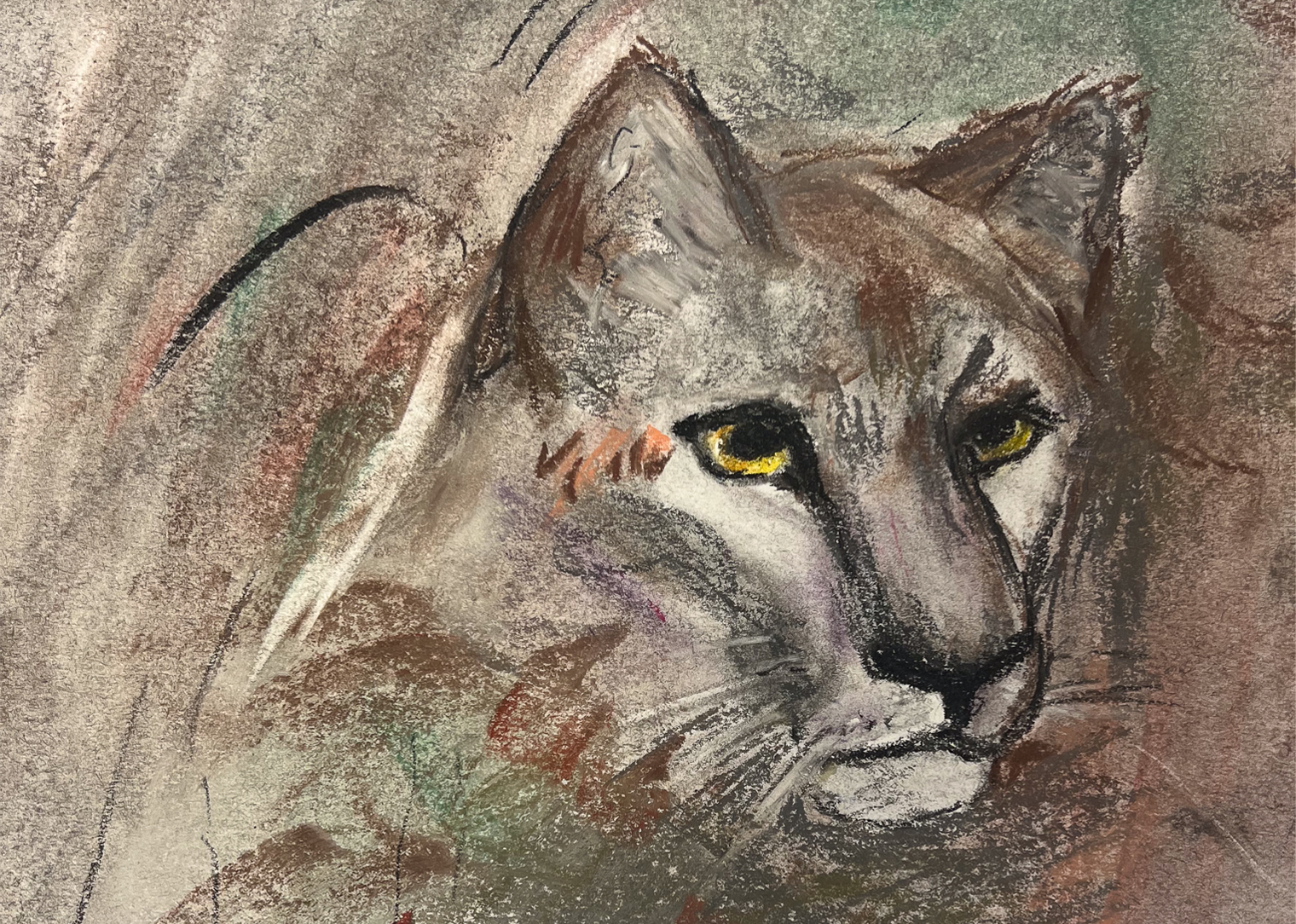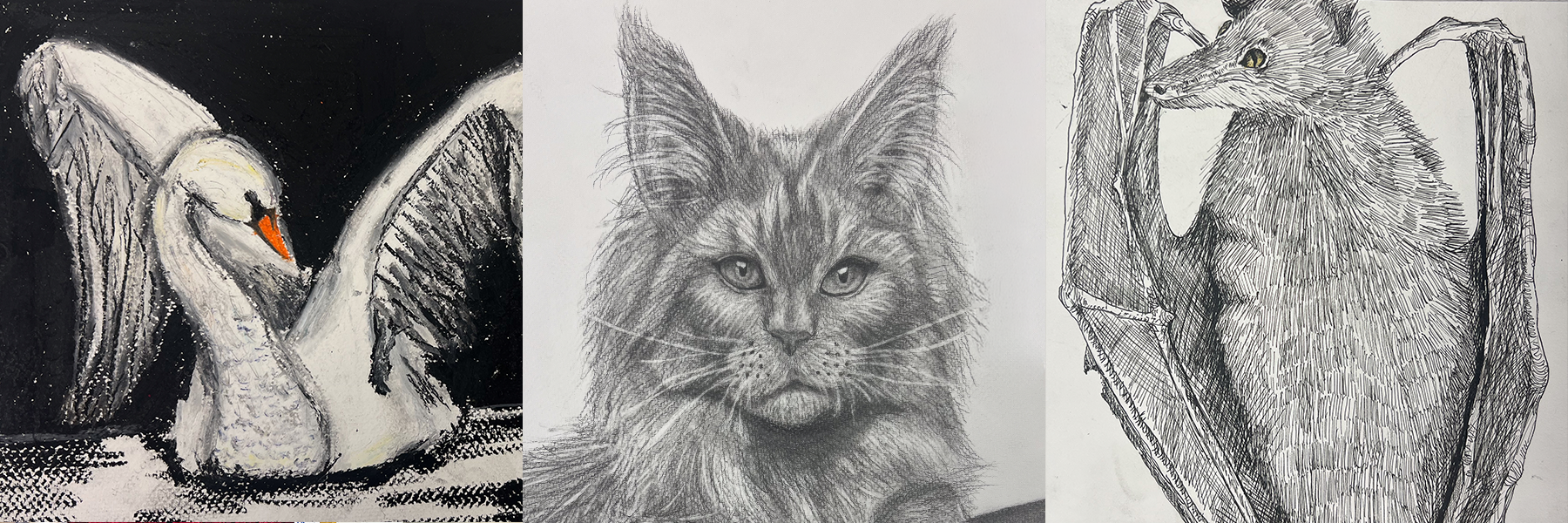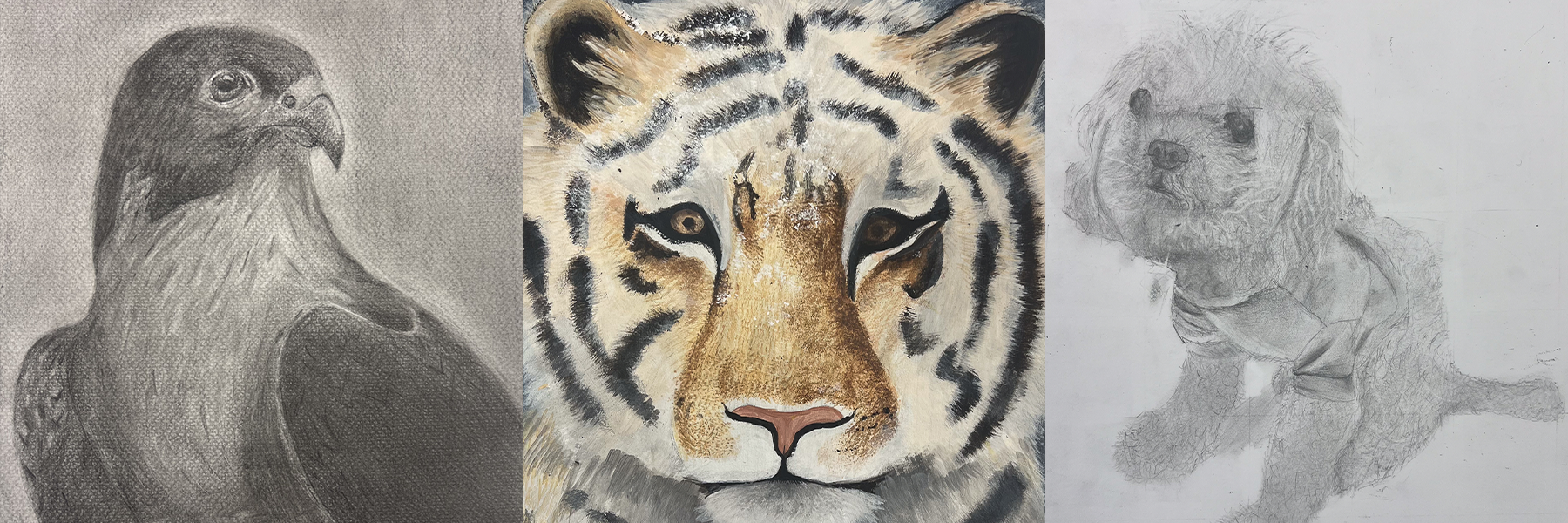
In Art and Design II at Institut auf dem Rosenberg, the studio became a theatre of quiet observation. Students portrayed emotion through the forms of animals, studying posture, movement, and gaze to capture feelings that words often leave unsaid. A raised wing hinted at uncertainty, the tilt of a head suggested curiosity, and deliberate strokes of charcoal transformed instinct into narrative. This exercise was not merely about replicating physical forms but about interpreting the silent language of emotion that animals express through their bodies. The students learned to observe subtle cues—the tension in a predator's stance, the relaxed posture of a resting creature, the alertness in an animal's eyes—and translate these into visual stories. By focusing on these non-verbal expressions, they developed a deeper understanding of how form conveys psychological states, bridging the gap between artistic representation and emotional resonance. The process required patience and acute perception, as students spent hours studying references and practicing techniques to capture the essence of their subjects. This foundational work in the art program at Institut Rosenberg emphasized that true artistry begins with empathetic observation, where the artist must step into the world of their subject to authentically depict its inner life.
Layered colour and considered composition revealed that technique and empathy are natural companions in this artistic endeavor. By entering the world of their subjects, students refined both artistic discipline and emotional insight, demonstrating that remarkable ideas are not only constructed but also felt. The use of colour was strategic; warm tones might evoke comfort or aggression, while cooler shades could suggest solitude or tranquility, allowing students to enhance the emotional narrative of their pieces. Composition played a crucial role in guiding the viewer's eye and reinforcing the thematic elements, with careful placement of subjects within the frame to create balance and focus. This integration of technical skill with empathetic engagement highlighted how art education fosters holistic development, blending creativity with critical thinking. Students explored various mediums and styles, from charcoal sketches to painted works, each chosen to best express the intended emotion and form. The project underscored the importance of mindfulness in creation, where every stroke and hue was a deliberate choice aimed at conveying deeper meanings. Through this process, learners discovered that artistic excellence arises from a synergy of practiced technique and genuine connection to the subject matter, enriching their ability to communicate complex ideas visually.