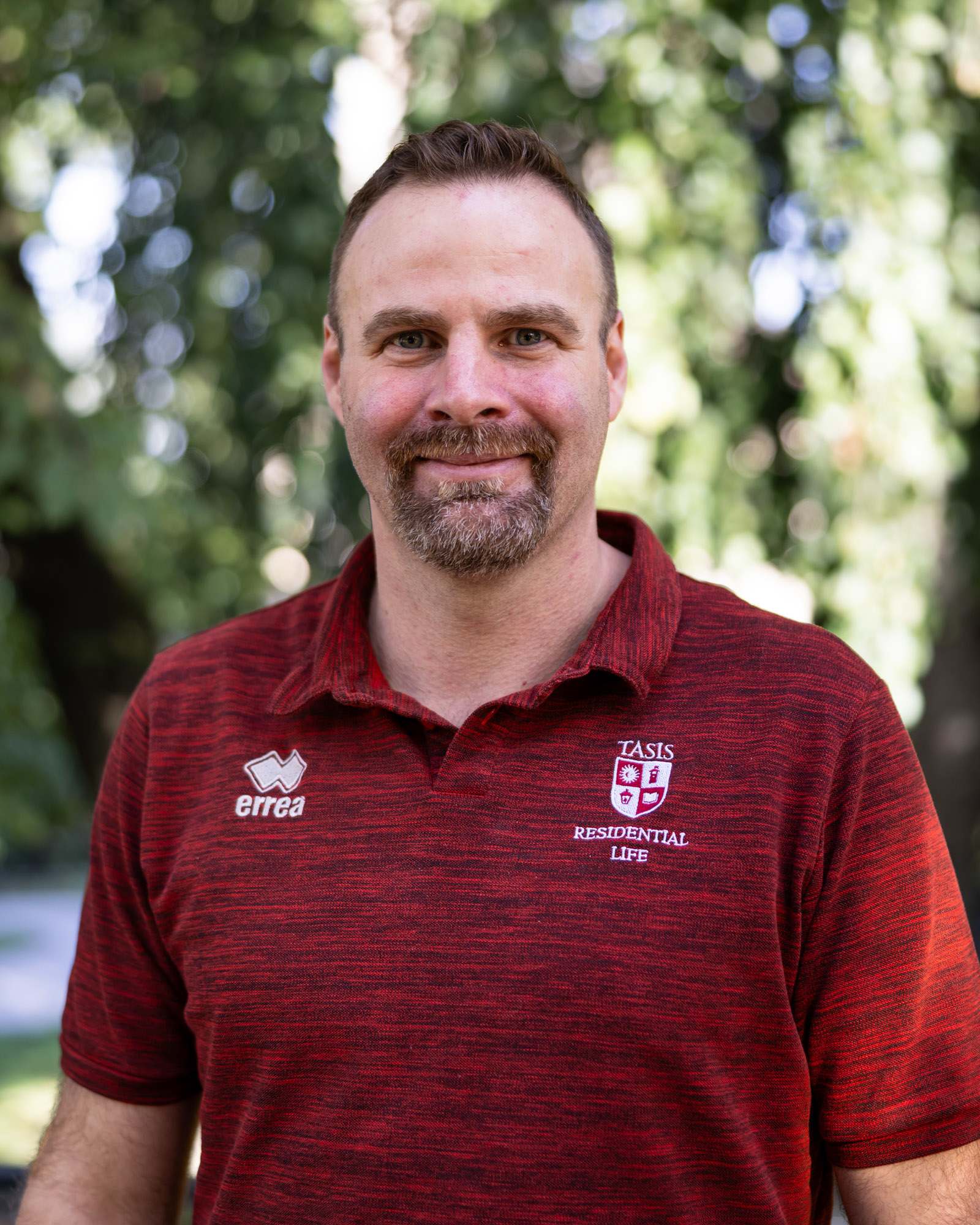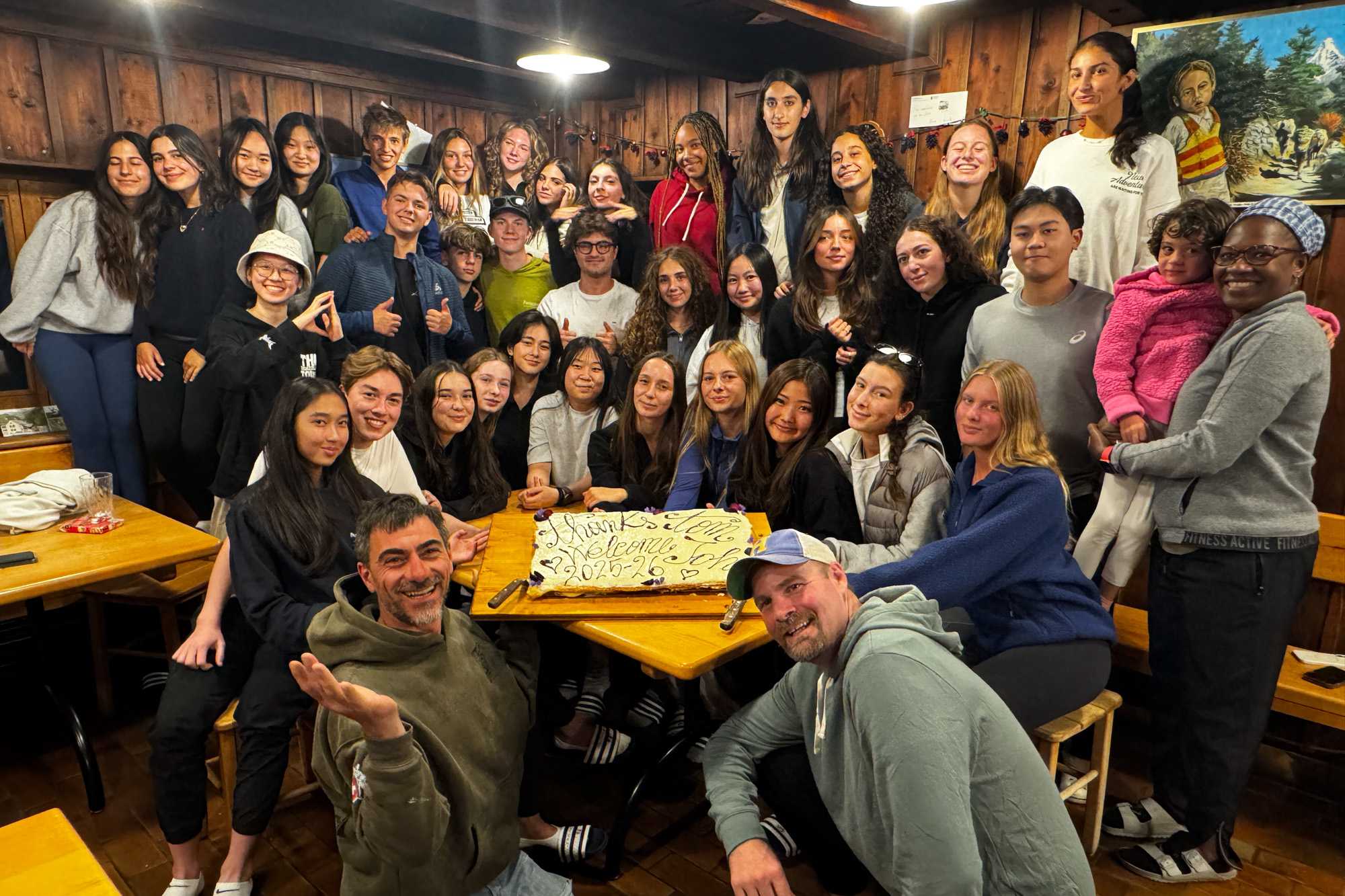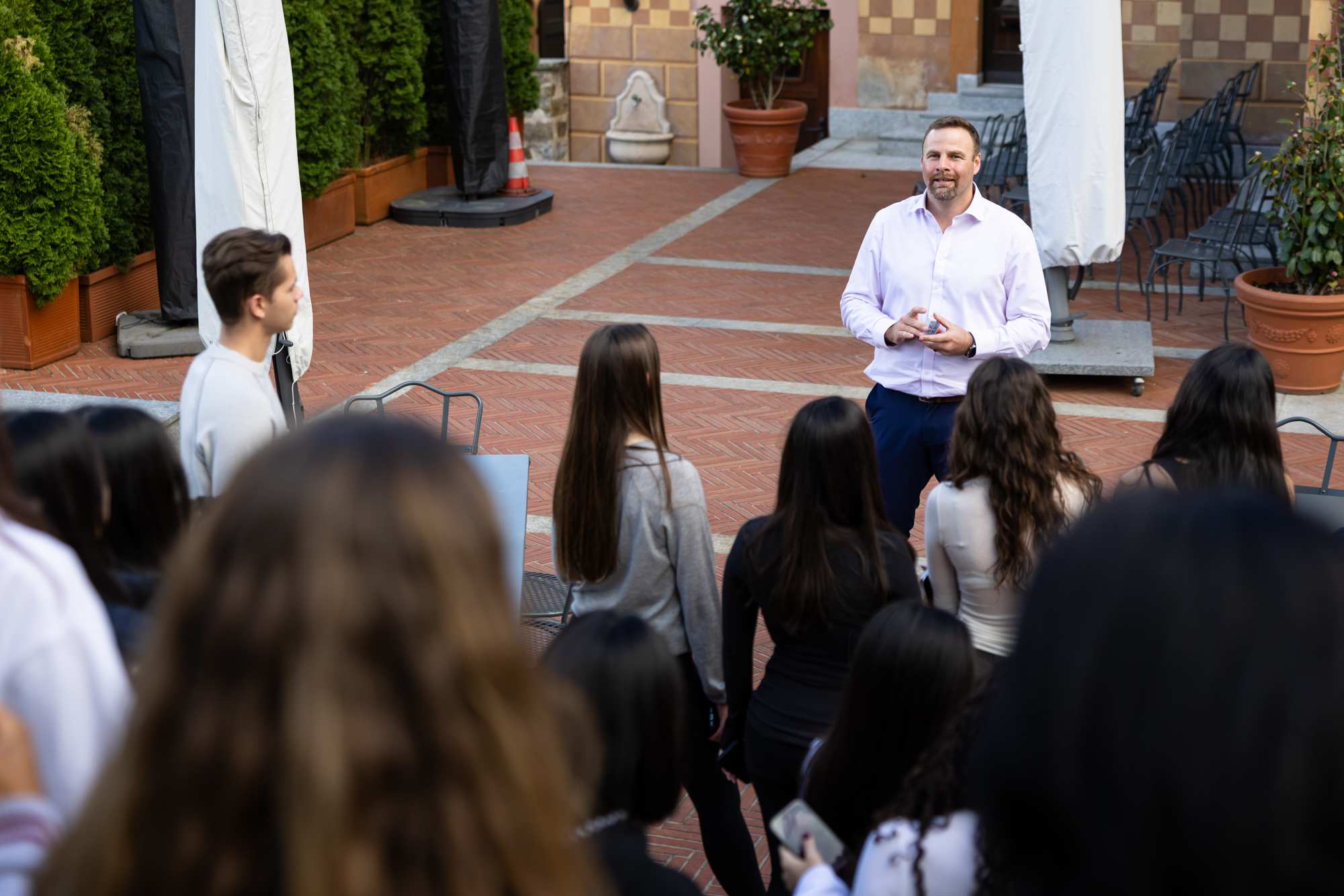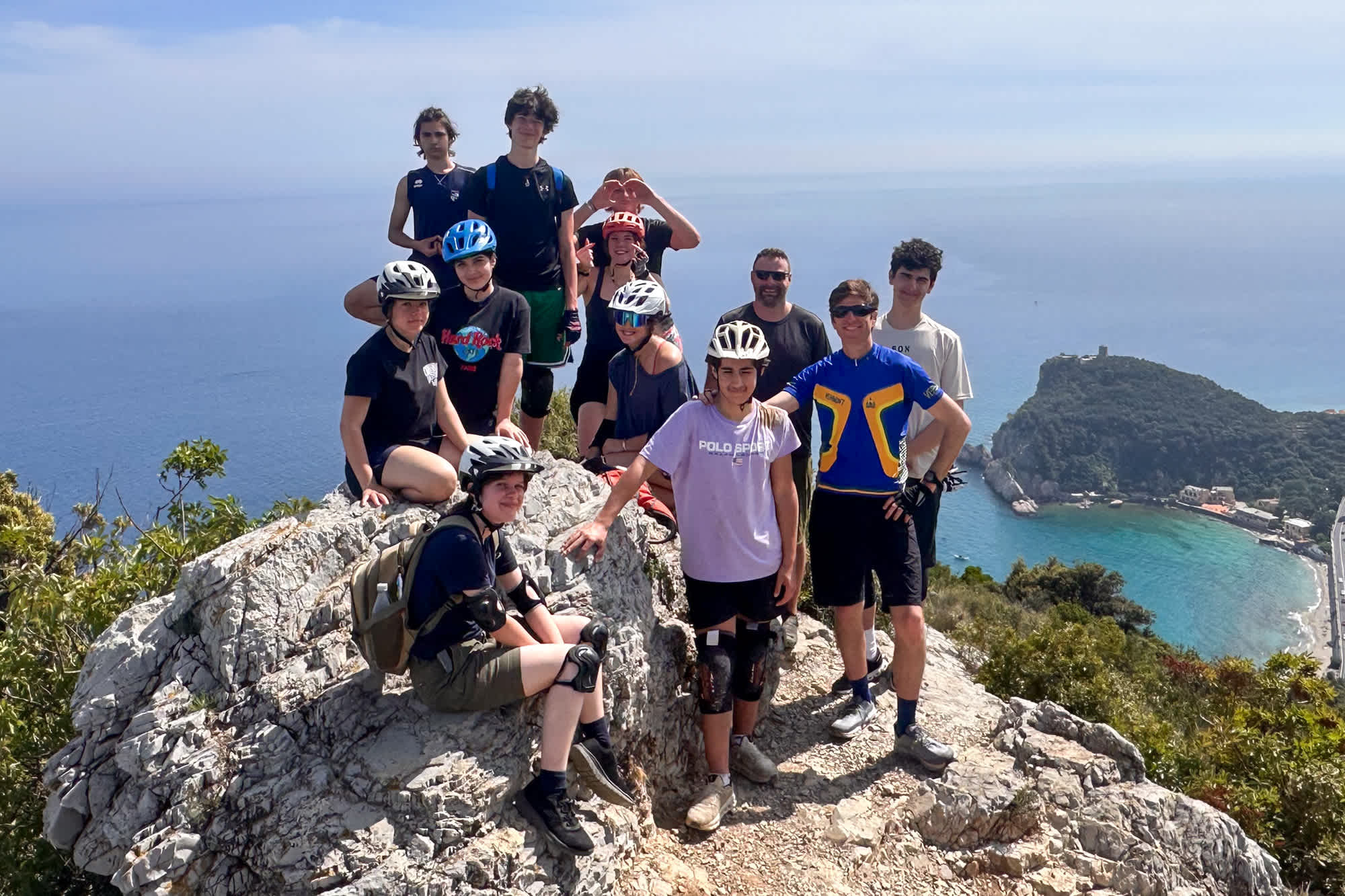
Elene Lomia ’27 interviewed Dean of Residential Life John Gordon, who arrived at TASIS in 2025 and played professional hockey for seven years before transitioning to a career in education. Gordon described his educational background and professional experiences prior to his arrival at TASIS. He grew up in Canada, attended public school in Ontario, and then moved to the US for college at Hamilton College, where he played hockey and graduated with a degree in Classics. After Hamilton, he spent a few years playing professional hockey throughout Europe and got into the boarding school world by chance. His wife had worked at a boarding school prior to meeting, and when they revisited that campus, he fell in love with the boarding school model. A couple of weeks later, they decided to end his hockey career and accepted positions at the school. He had just earned his Master's Degree in Education at the time. He spent a couple of years as a teacher, became a department chair, and then moved into administration as a dean of students. Professionally, after his first school, he moved to Hawai’i to start a summer boarding program. He spent a year doing that before becoming the dean of residential life at that school, where he stayed through the pandemic. Then he worked at a school in Arizona as both dean of students and dean of enrollment, gaining admissions experience. He then saw the opportunity for the dean of residential life position at TASIS, submitted an application, and was appointed. Gordon also described his approach to his role at TASIS and what he considers important about residential life that people might not always notice. He explained his 'why': he has always loved working with students and creating opportunities for them to have a great experience. He recognizes that in moving into administrative roles, he sometimes spends less time directly with students. However, he feels that in an administrative position, he has the opportunity to truly influence the student experience by being part of the decision-making process. His approach is to look at everything through two main lenses: safety and security for the school and students, and what will have the most positive and beneficial impact on the student experience. He feels very fortunate to be in a position that allows him to shape that experience. He finds it important that no two days are the same, and no two students are the same. As residential life professionals, they have the opportunity to get to know students outside of the classroom—whether through their extracurricular pursuits, helping them develop skills to live with others, or fostering study habits, dorm coexistence, and character development. Working in residential life isn't just about supervising a dormitory—it's about recognizing that their influence goes far beyond the classroom and touches nearly every aspect of students' lives.
Gordon discussed the biggest challenges and most rewarding parts of his role at TASIS. The biggest challenge, he said, is similar to what many students face: at times, they can be time-poor. By that, he means there is so much happening at the school—so many wonderful opportunities for students and faculty—that fitting everything into a day, a week, or a month can be difficult. The most rewarding part of his job is getting to see and feel the impact he can make, and that often comes from individual conversations with students. It can be challenging to make time for those one-on-one or small-group discussions, but whenever he does, he realizes those interactions are what he truly enjoys in education—getting to know the kids and being an approachable person they can come to with questions. He also shared his goals for the year. There are two parts to his goal. As he has mentioned before when talking with students and faculty, this is a year of a lot of change for the Residential Life program. They have opened a new dormitory, which is both exciting and challenging. They have also completely restructured their dorm team model. One of his main goals this year is to ensure that this restructuring sets both dorm parents and students up for success by limiting the student-to-faculty ratio. He loves having one-on-one or small-group conversations with kids, and they are working to ensure that dorm parents are able to take the time to have meaningful interactions—to really know and understand the students in their care. Continuing in that direction will be deeply beneficial for both the school and the students, not only for this year but moving into the future as well. When asked if he had considered becoming a dorm parent, Gordon said he misses being involved in residential life as a dorm parent. In his current role, he serves as a duty administrator instead of living in the dorm. Serving as a dorm parent provides so many opportunities for connection with students, which is something he has done in the past, and he would love to find more opportunities to get involved in the day-to-day student experience. He also explained how he ended up becoming a Dean of Residential Life when he originally went to college with the goal of playing hockey. He went to college not knowing exactly what he wanted to do, and he was very fortunate to play professional hockey for seven years after graduating. That was a great opportunity to travel and experience things he otherwise wouldn't have. When he started teaching, he taught 9th-grade history at an all-boys junior boarding school. He was a teacher, a coach, an advisor, and a dorm parent. He enjoyed teaching, but he realized he enjoyed the teachable moments that came through coaching and residential life even more—that informal, unstructured guidance. As new positions opened up throughout his career, it just so happened that he always gravitated toward residential life. It wasn't something he had mapped out as a five-year plan, but as he looked at different roles at his previous schools, he felt comfortable taking on those responsibilities to continue growing professionally and making an impact. While his original goal was simply to teach, doing so at a boarding school opened up a whole other career path that wouldn't have been available at a day school. Gordon also reflected on how being part of sports teams shaped him as an individual and shared one lesson he learned as an athlete that he still applies to his daily life. Playing team sports growing up—and having the opportunity to continue in college and professionally—still shapes his daily decision-making. As a professional, he aims to be very collaborative. Playing sports across different levels taught him that every person on a team has a role to play, and a team only goes as far as its collective mindset takes it. He has been on teams where he was expected to be a top scorer, and on others where he was expected to be a shutdown defender. Sometimes you make individual sacrifices for the good of the team. That principle directly applies to his work today. Everyone at the school has a role to play and signed up to fulfill a specific purpose in the community. If we all focus on doing our jobs well, it ultimately makes TASIS the best team it can be. In sports, as in life and academics, there is always room to improve. None of us are finished products. He views students as coming to us at a specific point in their journey, and a major part of our job is to help them grow as individuals regardless of their starting point. Growing within a boarding environment can be challenging, so learning to live cohesively, being part of a community, and sometimes setting aside personal desires for the greater good are essential lessons. That's something he tries to share with students. Finally, he offered one piece of advice to students, especially those involved in sports or other extracurricular activities: he wants all students to know that everyone is a unique individual, and the true measure of progress is comparing yourself only to previous versions of yourself. Oftentimes, students compare themselves to those around them, which becomes a roadblock to their own growth. He hopes everyone recognizes that it's okay to be who you are: who you are right now is exactly as it should be, and that is good enough. If you stay curious and push yourself to improve in the areas within your control, you will be able to surround yourself with people who want to help you and support you. Everyone is at a different point in their journey, but surrounding yourself with people who are there for you for the right reasons is the best way to strive for your own version of excellence.