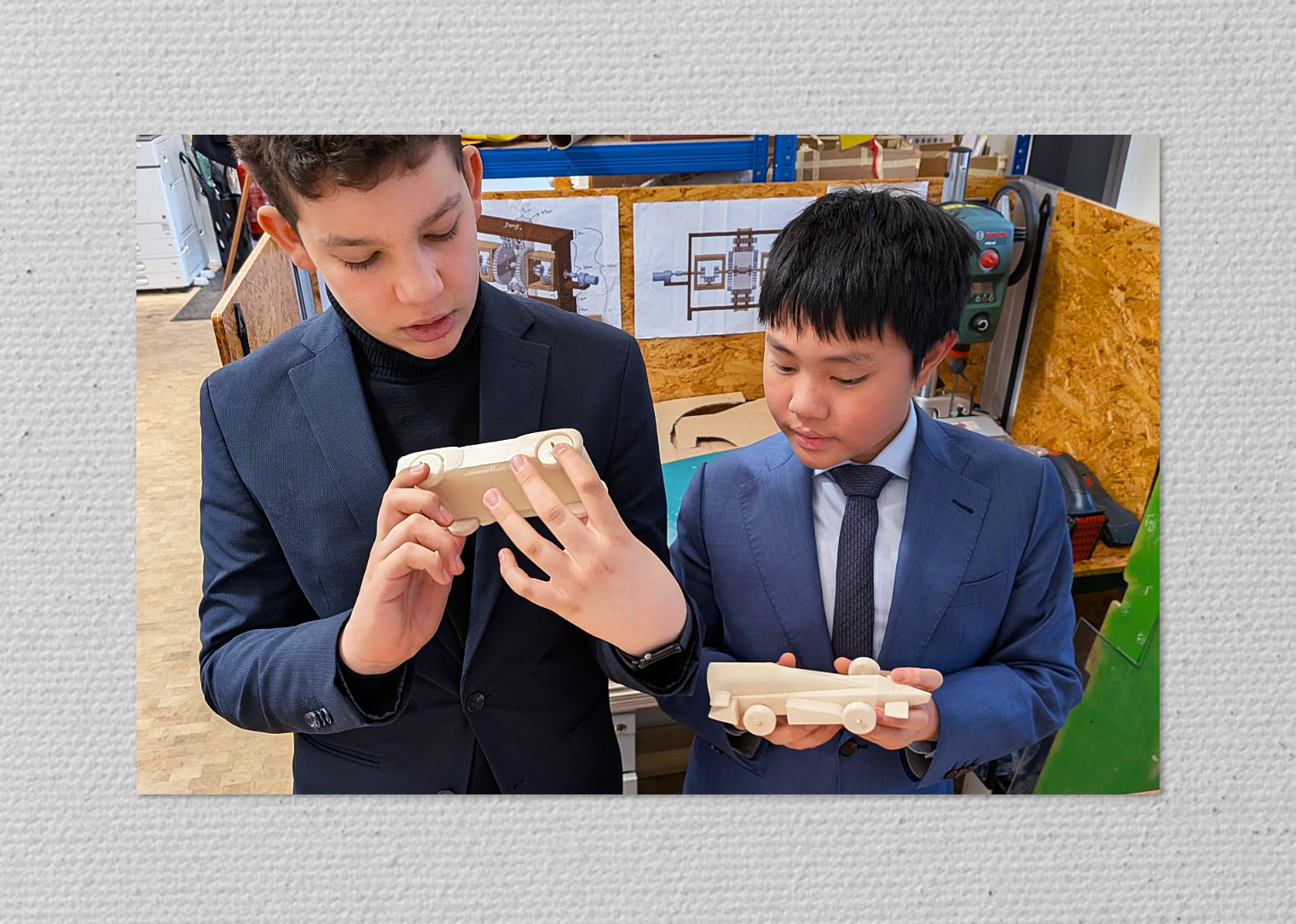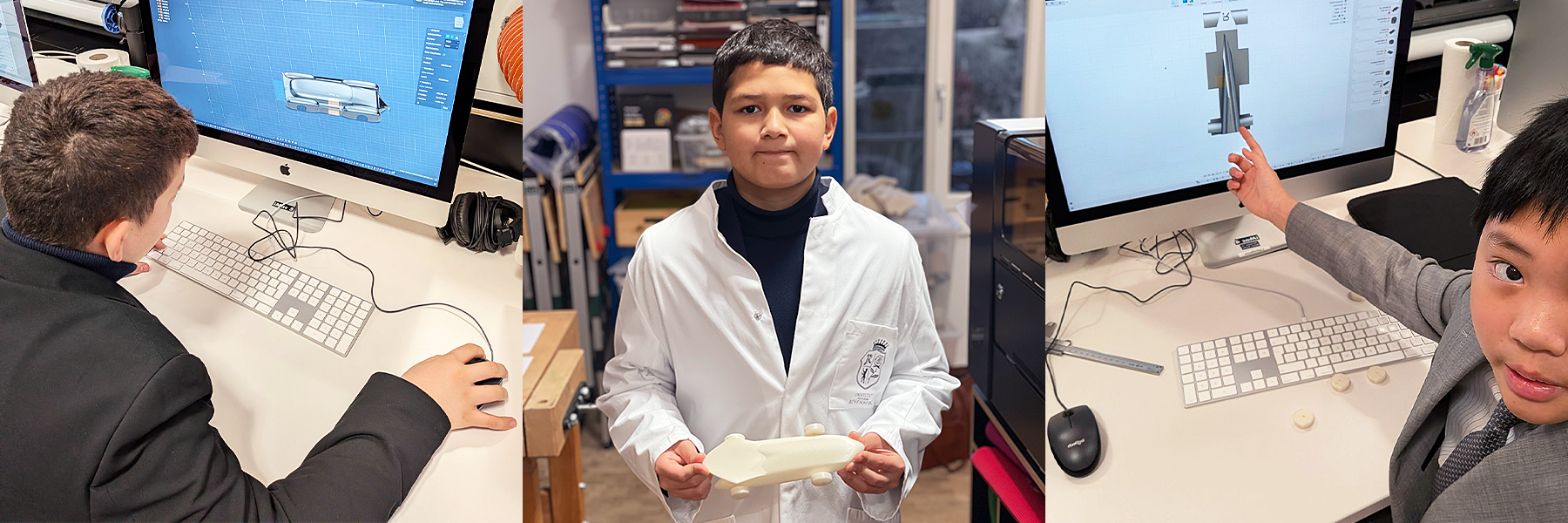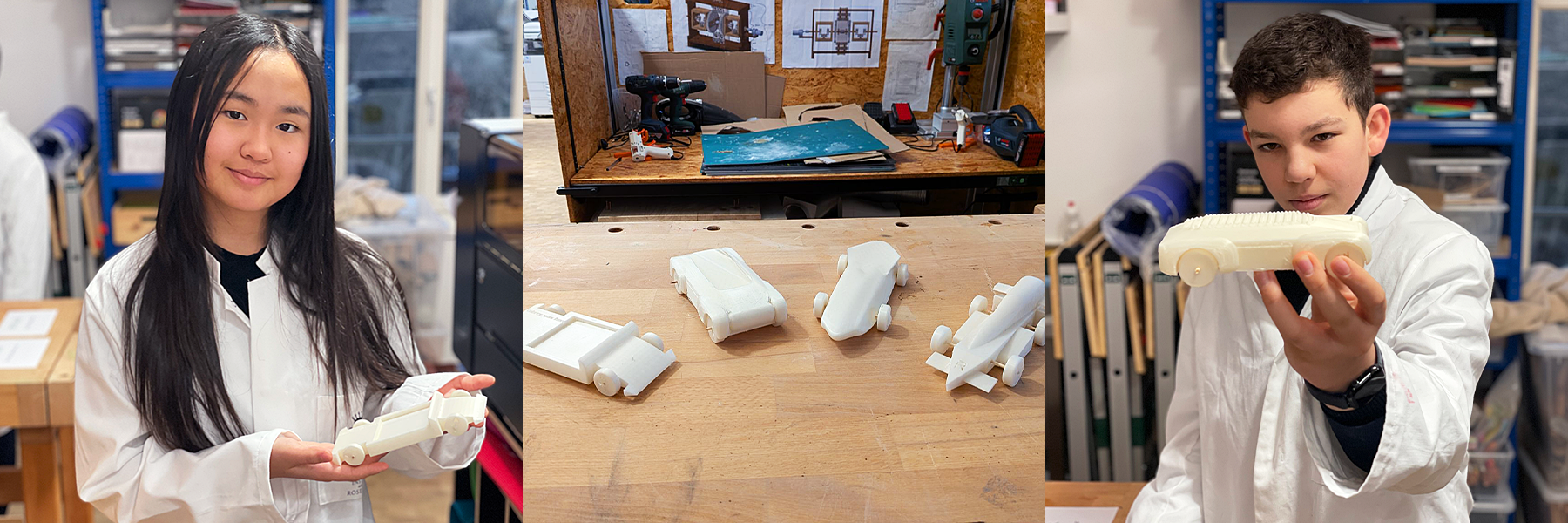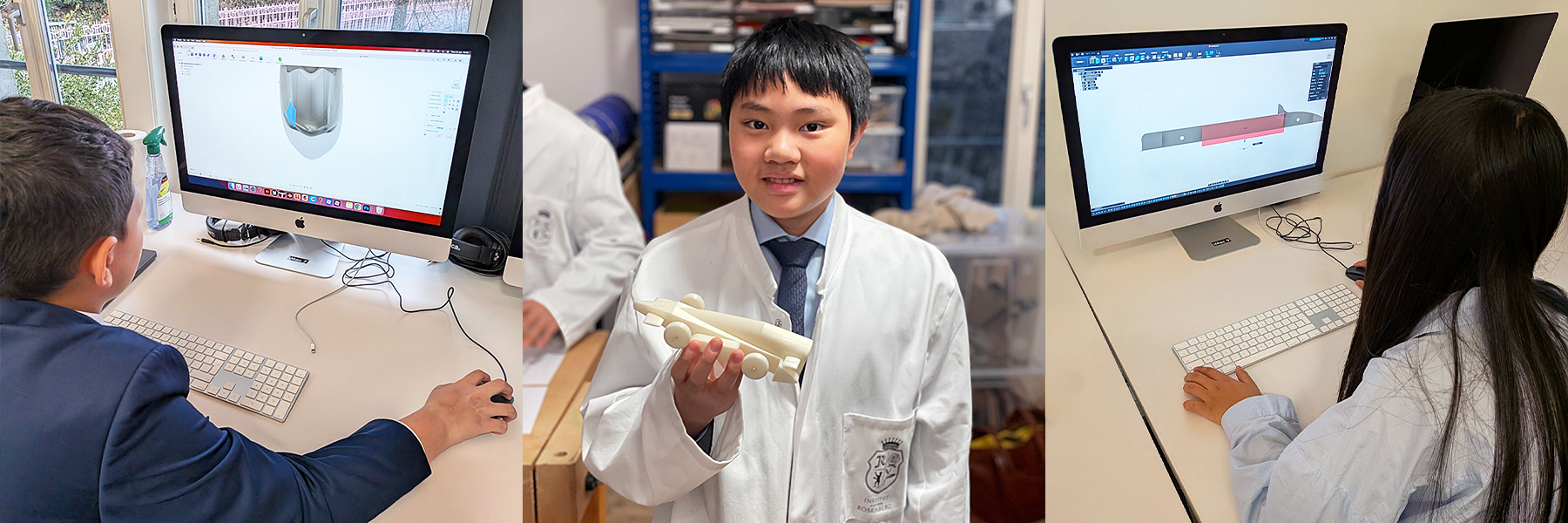
In the Creative Lab at Institut Rosenberg, students explored how ideas can gather momentum through an innovative interdisciplinary project. In MS Seminar I and MS Science I, students investigated forces and aerodynamics, discovering how physics governs motion in the real world. Guided by SDG 9, which focuses on industry, innovation, and infrastructure, they approached engineering as both scientific inquiry and societal contribution, designing and prototyping 3D printed cars with clear intent. This project exemplified how theoretical concepts can be transformed into tangible applications, bridging the gap between classroom learning and real-world problem-solving.
The educational journey began with foundational research into drag, airflow, scaling, and dimensioning—each element critical to understanding how design influences performance. Students learned to apply principles of physics to create efficient models, considering how every curve and angle could affect speed and stability. This phase required meticulous attention to detail, as even minor adjustments could significantly impact the final outcome. By integrating scientific inquiry with creative design, students developed a holistic understanding of engineering, recognizing its potential to drive innovation and contribute to sustainable development goals. The project's alignment with SDG 9 underscored the importance of infrastructure and technological advancement in modern education, preparing students to tackle global challenges through ingenuity and collaboration.
Mastering Fusion within the Autodesk Suite demanded patience and precision, as students navigated complex software to bring their designs to life. This technical skill-building was essential for translating abstract ideas into functional prototypes, with each decision shaped by ongoing research into aerodynamic principles. The result was a series of finely tuned models complete with moving axles and wheels, showcasing the students' ability to merge digital proficiency with hands-on craftsmanship. The culmination of this effort was the final race, where theory transformed into exhilaration as calculation met competition on the track. This event not only tested the cars' performance but also celebrated the students' dedication and teamwork, highlighting the practical rewards of their hard work.
A standout achievement was celebrated with congratulations to Umar U., whose car triumphed in both speed and distance, demonstrating exceptional design and execution. This success story at Institut Rosenberg illustrates how project-based learning can foster excellence and motivation among students. The race served as a powerful reminder of how educational initiatives can inspire innovation, blending STEM disciplines with creative exploration to prepare learners for future endeavors in technology and engineering. Through such immersive experiences, students gain not only technical skills but also confidence and a deeper appreciation for the iterative process of design and improvement.