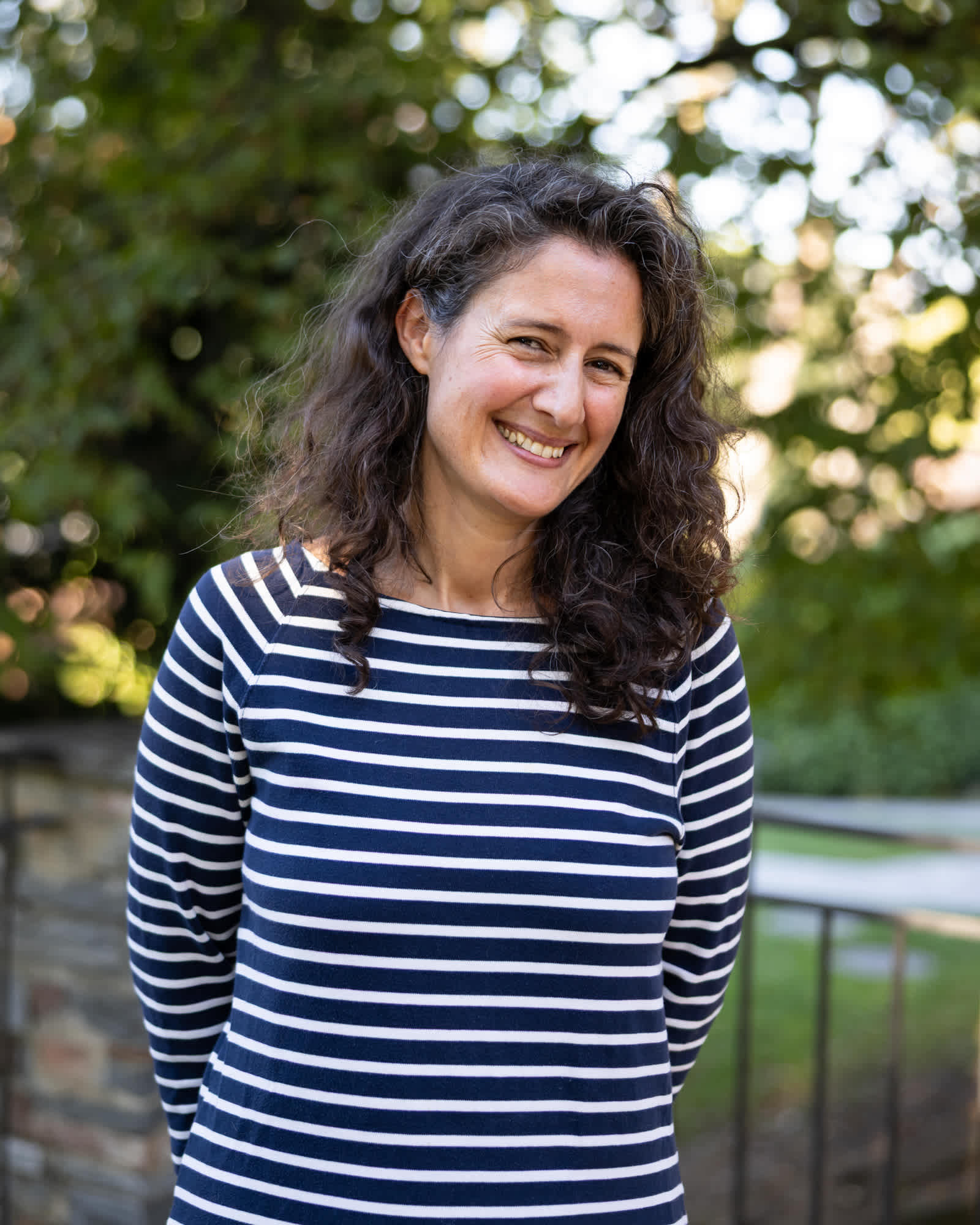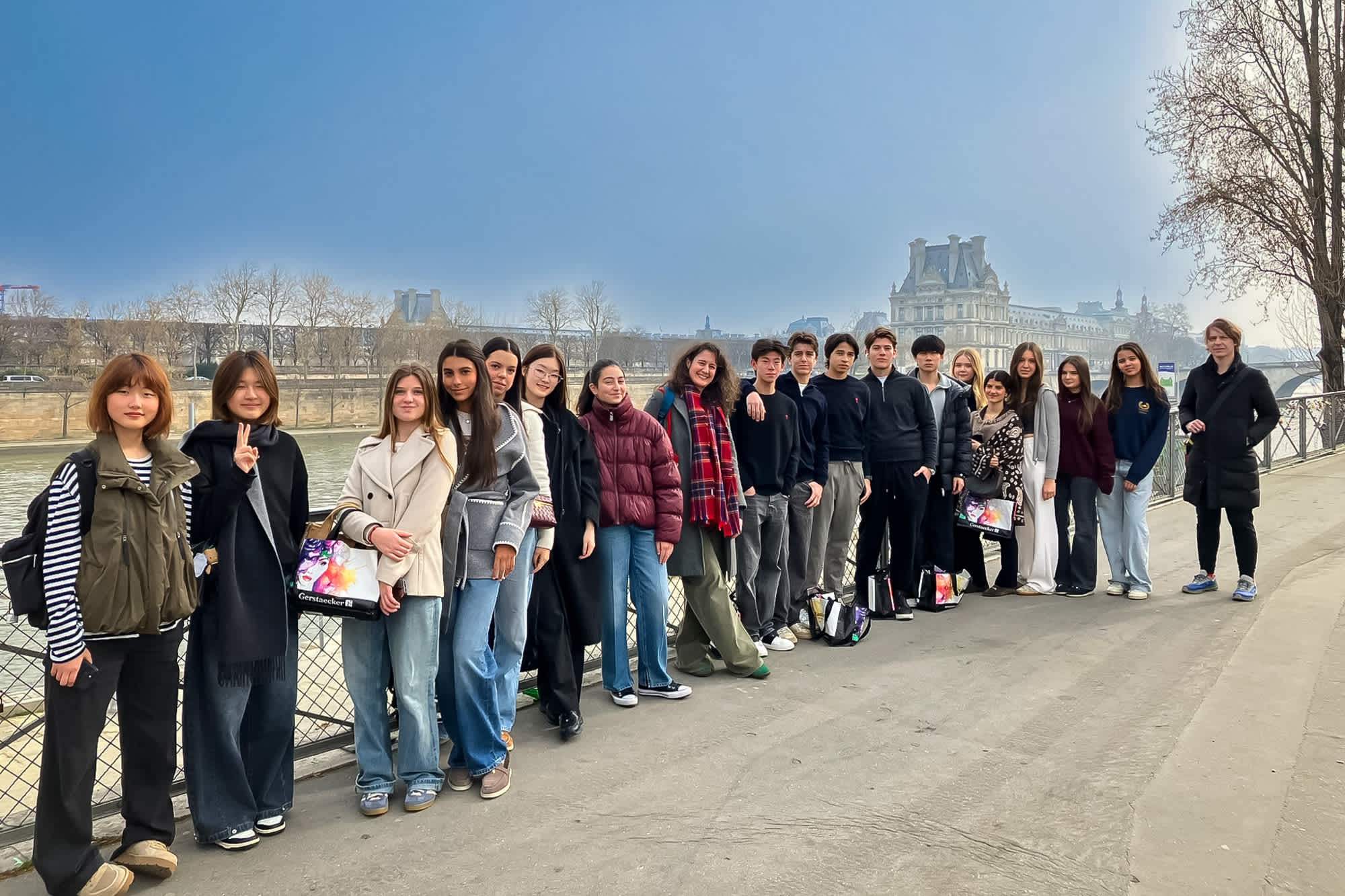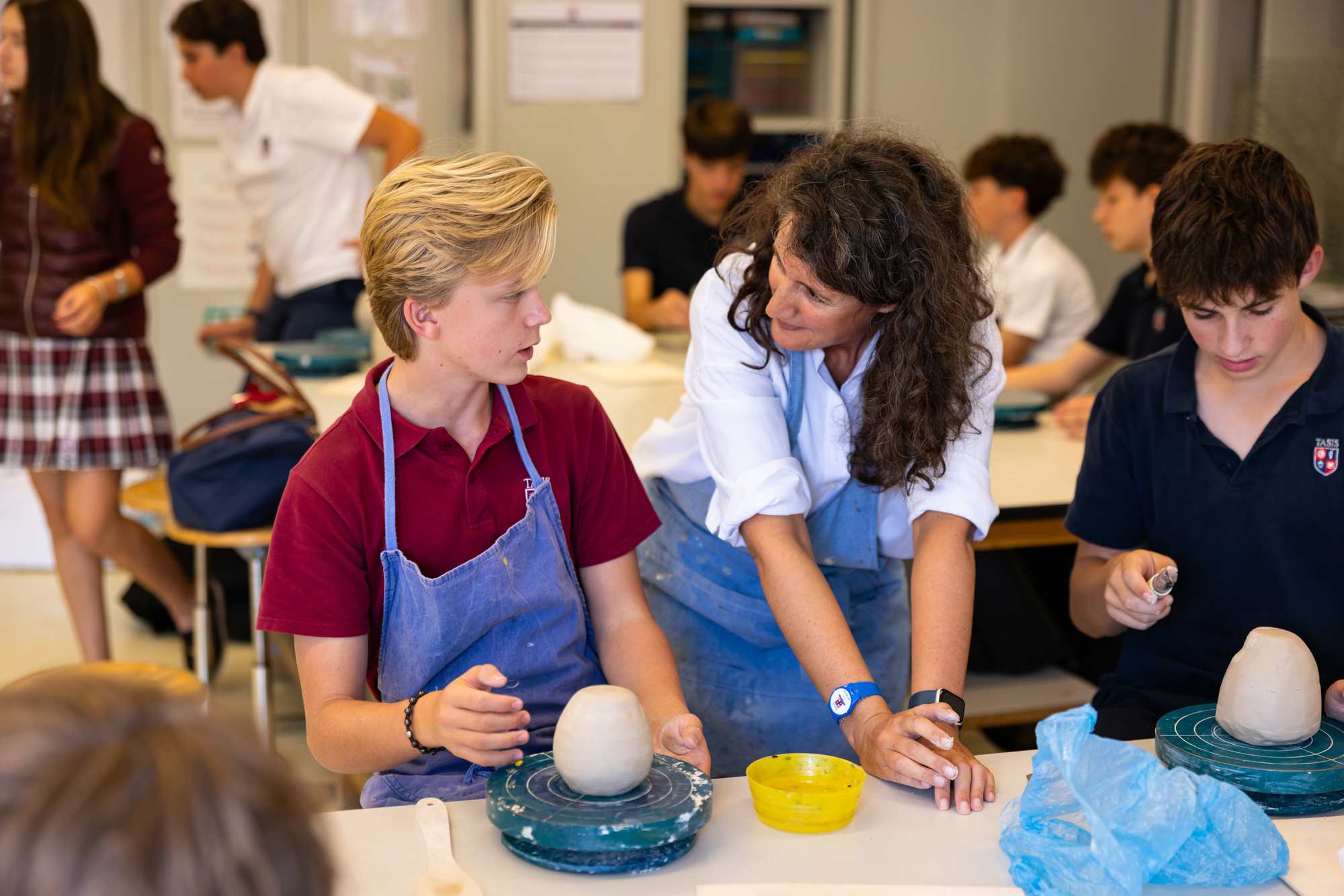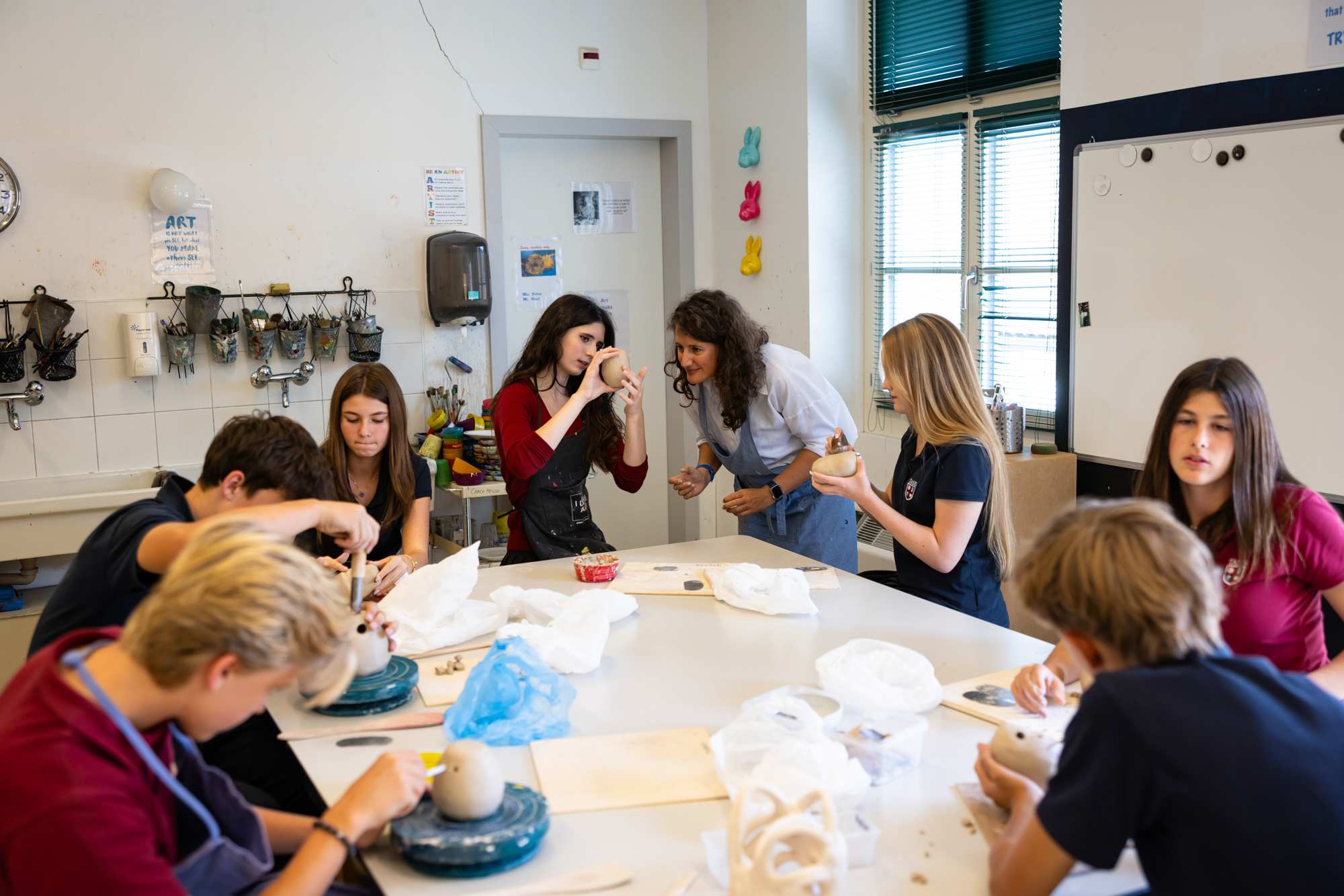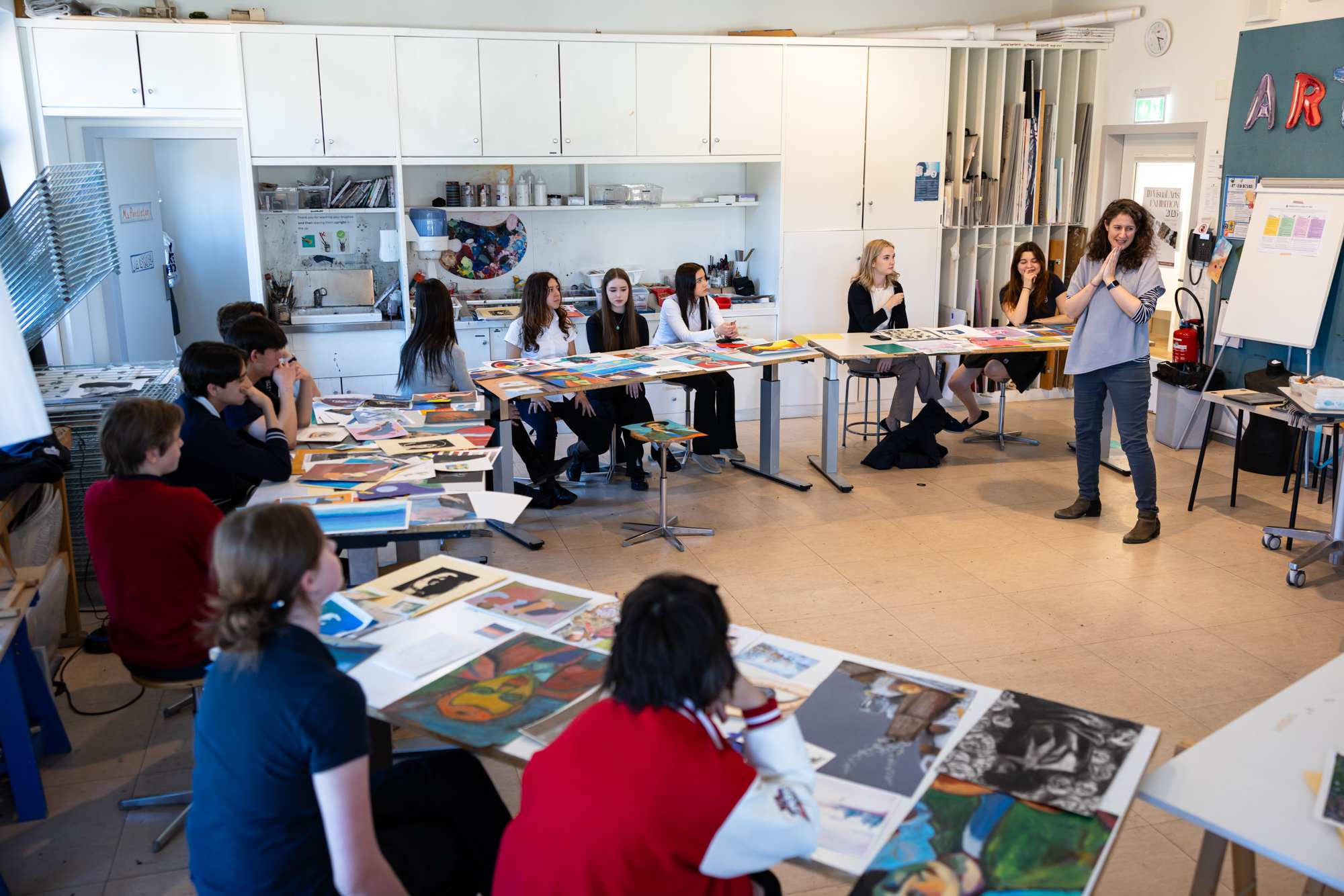
Ihsan Bektas ’27 interviewed High School Art Teacher Zeynep Baransel, who joined TASIS in 2025 and currently teaches AP Art & Design (Drawing, 2D, and 3D) and the Ceramics module of the newly offered Foundations in Art & Design course, in addition to an after-school activity for Middle School students. Beyond her classes, she is actively involved in the Academic Travel program as a co-chaperone or leader, having traveled with students to Paris twice—once with AP Art & Design students invited by SCAD and once with Drawing & Painting students—as well as to Venice and Davos. She also served as co-advisor of the 10th-grade Intergenerations Global Service Program group, organizing visits to the nearby retirement home Al Pagnolo, where students played games, made music, brought gifts, and conversed with residents. Baransel’s educational background began in Istanbul before she moved to Florence at 18 to study Graphic Design and Illustration at Lorenzo de’ Medici Institute, where teachers encouraged her to pursue fine arts. She was accepted with the highest score to the Accademia di Belle Arti di Firenze, studied Painting under Adriano Bimbi, and graduated cum laude. A chance elective in Printmaking sparked a passion that led to a scholarship from the Italian government for a full-year intensive course at Il Bisonte, where she worked with lithographer Franco Pistelli and multi-plate color printmaking professor Swietlan Kraczyna. After ten years in Italy, she returned to Istanbul, completed a master’s in Visual Arts at Mimar Sinan Fine Arts University, and began a Ph.D. in Art History at Istanbul Technical University while lecturing at various universities for four years. After her daughter was born, she shifted to primary and secondary education, working as an IB PYP Art teacher, high school art teacher and department head, and IB DP Visual Arts teacher; since 2020 she has been an examiner for IB DP Visual Arts HL. Before TASIS, she taught at Robert College in Istanbul, gaining familiarity with American schools and teaching AP Art and Design, Studio Art, Ceramics, and Graphic Design. She has also been a professional translator since 2002, translating 14 books from English and Italian to Turkish.
Baransel describes her teaching philosophy as balancing technical skill acquisition—which she considers the easier part—with the more complex development of creative thinking. She believes everyone is or can be creative, but that it requires curiosity, risk-taking, comfort with uncertainty, and regular training like a muscle. Her main goal is to help students connect with their own creative voice and stretch them slightly each class. What she likes most about teaching at TASIS is the international atmosphere, the opportunity to meet students and colleagues from around the world with fascinating backgrounds, and the school culture that embraces sports, arts, and travel. She values the community feeling, especially evening meals in the dining hall where teachers, dorm parents, and students eat together, and appreciates that most faculty are involved in sports, connected to nature, and take on dorm roles. She also cherishes the Academic Travel program for getting to know students outside the classroom. For this year, she hopes to see the new Foundations in Art & Design course—offered to ninth graders who choose Visual Arts as an elective—succeed in giving students experience across Drawing & Painting, Architecture, Photography, and Ceramics with all four art teachers, providing a basis for advanced IB and AP courses. She is also excited about the first offering of AP 3D Art & Design, which supports students passionate about fashion design, jewelry design, architecture, and ceramics in building 3D portfolios. On printmaking, she explains that external factors like acid strength, resin reactions, and humidity create a conversation with the material, pushing her to be present and spontaneous, and that the resistance of materials allows for more sculptural, visible marks. She also values the matrix plate and multiple prints as documentation. Comparing translation to art, she notes that both involve deep listening—to an author’s voice or to one’s own mind’s melody—and that concepts linger and resolve unexpectedly. To students who say “I can’t draw,” she responds that everyone can draw with patience and comfort with trial and error, comparing it to athletic training, and laments that natural confidence often fades in middle school but can return. Regarding AI, she believes art’s value lies in process and learning, not just product, and that creative thinking is more important than ever to direct and evaluate AI output wisely.